

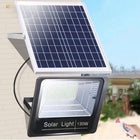


Outdoor Solar LED Wall Lamp with Motion Sensor: A Practical Guide for Garage Entrances, Doorways, and Patios

If you need no-wiring lighting for a garage entrance, doorway, patio, side yard, garden wall, or fence, a solar motion sensor wall light is usually more practical than a decorative path light. NoxLumin’s Outdoor Solar LED Wall Lamp with Motion Sensor Detector is built for wall-mounted visibility: it combines solar charging, PIR motion detection, 450–1100 lumens of output, IP65 outdoor protection, and selectable lighting modes for different entry and service areas.


What is this solar motion sensor wall light best for?
This light is best for outdoor areas where people need visibility when approaching a wall, door, gate, garage, patio, shed, or fence line. It does not require wiring, so it is useful where running electrical cable would be inconvenient. Because it is motion-activated, it is more functional than a purely decorative solar lamp, but less complex than a hardwired security floodlight.
Key takeaways
- Use the 24LED version for lower walls and smaller entry areas.
- Use the 48LED version for most garage entrances, patios, and medium side yards.
- Use the 60LED version for higher mounting points or wider coverage needs.
- Choose Dim-to-Bright mode for everyday entry lighting and Off-to-Bright mode for darker security-style areas.
- Install it where the integrated solar panel can receive direct sunlight during the day.
Which version should you choose?
The main differences are brightness, battery capacity, solar panel power, suggested installation height, and coverage area. According to the NoxLumin product specifications, the product is available in 24LED, 48LED, and 60LED versions.
| Version | Brightness | Battery | Solar panel | Suggested height | Best use |
|---|---|---|---|---|---|
| 24LED | 450 lumens | 1500mAh | 5V / 1.5W | Below 2 meters | Small doorways, narrow paths, low garden walls |
| 48LED | 900 lumens | 3000mAh | 5V / 3.2W | 2–3 meters | Garage entrances, patios, sheds, medium side yards |
| 60LED | 1100 lumens | 6000mAh | 5V / 4.2W | Above 3 meters | Wider garage walls, barns, larger patios, street-facing entries |

How do the motion sensor and lighting modes work?
The PIR sensor is designed to detect movement from about 5–10 meters / 16.4–32.8 feet, with a detection angle of more than 180°. This helps the light activate when someone approaches a garage, side door, patio entrance, gate, or wall-mounted service area.
Motion activation also supports better outdoor lighting control. DarkSky International’s responsible outdoor lighting principles recommend that outdoor lighting be useful, targeted, low level, controlled, and warmer in color where possible. A motion sensor helps because the light does not need to stay at full brightness all night.
| Mode | What it does | Best for |
|---|---|---|
| Dim-to-Bright | Stays dim, then brightens when motion is detected | Garage entrances, patios, front doors |
| Constant On | Provides continuous lower-level lighting | Areas that need basic visibility all night |
| Off-to-Bright | Stays off, then turns bright when motion is detected | Side gates, sheds, storage areas, darker service paths |
| Emergency Constant On | Keeps the light on for temporary continuous visibility | Short-term outdoor tasks or unusual situations |
| Off | Turns the fixture off | Storage, testing, or seasonal shutdown |

Where should you install it?
Install the light on a wall, fence, post, garage exterior, shed, barn, or doorway area where the solar panel can receive sunlight. The U.S. Department of Energy explains that outdoor solar lighting depends on solar cells charging batteries during the day, so shade from trees, roof overhangs, fences, or nearby buildings can reduce nighttime performance.
- Garage entrance: choose 48LED or 60LED if the fixture is mounted higher or needs wider driveway-side visibility.
- Front or side door: choose 24LED or 48LED depending on mounting height and surrounding darkness.
- Patio or backyard wall: use Dim-to-Bright mode for softer everyday visibility.
- Fence, barn, shed, or side yard: use Off-to-Bright mode when you want the area dark until motion is detected.
Who should and should not choose this product?
| Good fit | Not a good fit |
|---|---|
| Homeowners who want no-wiring wall lighting | Projects requiring hardwired lighting connected to a wall switch |
| Garage, doorway, patio, fence, shed, and side-yard visibility | Large parking lots or wide commercial floodlight coverage |
| Sunny wall or post locations with direct solar charging | Deep eaves, covered porches, or permanently shaded walls |
| Users who need motion detection and selectable modes | Purely decorative garden borders where low path lights are enough |

Installation checklist
- Match the LED version to the mounting height and coverage area.
- Confirm that the solar panel gets direct sun during the day.
- Avoid deep roof overhangs, dense tree shade, and covered porch ceilings.
- Point the sensor toward the walking path, driveway approach, or entry zone.
- Test the sensor and brightness at night before finalizing the position.
- Clean the solar panel periodically to reduce dust, pollen, or debris buildup.
Common mistakes to avoid
- Installing it in shade: poor charging is the most common reason solar wall lights look dim or run for fewer hours.
- Choosing the wrong size: a low doorway may not need the 60LED version, while a high garage wall may feel underpowered with 24LED.
- Using constant mode unnecessarily: Dim-to-Bright or Off-to-Bright mode is usually more efficient for entry and side-yard use.
- Aiming the sensor incorrectly: the sensor should face the actual approach path, not a blank wall or unused area.
- Using it as a path marker: this is a wall-mounted light; solar pathway lights are better for marking walkway edges.
How does it compare with other outdoor solar lights?
| Light type | Best use | Main limitation |
|---|---|---|
| Solar motion sensor wall light | Garages, doorways, patios, side yards, fences | Needs direct sun at the fixture location |
| Solar pathway light | Walkways, garden edges, lawn borders | Not designed for wall-mounted entry visibility |
| Solar spotlight | Trees, statues, landscape accents | Not ideal as a doorway or garage wall light |
| Wired wall light | Permanent hardwired entry lighting | Requires wiring and installation work |
Recommended NoxLumin product
For no-wiring wall-mounted visibility around garages, doors, patios, garden walls, fences, barns, and side yards, the NoxLumin Outdoor Solar LED Wall Lamp with Motion Sensor Detector is the most relevant option. It offers 24LED, 48LED, and 60LED versions, white or warm white light, silver or black shell choices, IP65 waterproof protection, and motion-sensing modes for different outdoor entry scenarios.
For comparison shopping, browse Motion Sensor Solar Lights, Wall-Mounted Outdoor Lights, and Solar Energy Lights.
FAQ
Is this solar wall light good for a garage entrance?
Which version should I choose: 24LED, 48LED, or 60LED?
Can this solar wall light stay on all night?
Can it work under a roof or awning?
How far can the motion sensor detect movement?
Get more NoxLumin guides on Google
Add NoxLumin as a Preferred Source to help Google show you more of our outdoor lighting guides in Search and AI experiences.


Leave a comment