



Aluminum vs Plastic Solar Wall Lights: Which Housing Is Better Outdoors?

For a solar wall light that will remain outdoors year-round, a well-finished aluminum housing is usually the better long-term choice than an unspecified plastic housing. Aluminum is generally more rigid, resists everyday bumps better, and does not develop the red rust associated with iron or steel. When it is properly anodized, the surface gains a controlled oxide layer with improved corrosion and abrasion resistance. Plastic can still be a reasonable choice when the manufacturer identifies an outdoor-grade formulation and provides credible UV and weathering evidence, especially for a sheltered, low-impact location.
Plastic’s key weakness is aging. Sunlight, heat, moisture, and temperature cycles can gradually change a polymer. Depending on resin, additives, thickness, climate, and exposure time, a housing may fade, chalk, warp, become brittle, or crack. “Plastic” alone says little about expected service life.
Aluminum vs Plastic Solar Wall Lights at a Glance
| Buying factor | Anodized aluminum housing | Plastic housing |
|---|---|---|
| UV aging | The metal substrate is not degraded by ultraviolet light in the way a polymer can be, although dyes, seal quality, and appearance can still change over time. | An unspecified plastic is the riskier choice in strong sun. Outdoor-grade resin, UV stabilizers, pigments, and verified weathering tests can improve performance. |
| Rigidity and impact | Usually stiffer and less likely to flex around the mounting plate or screw points when the alloy and wall thickness are suitable. | Can be tough and lightweight, but thin sections and aging may increase the risk of cracked screw bosses, distortion, or brittle damage. |
| Corrosion | Does not form red rust, but it can oxidize, stain, pit, or suffer galvanic corrosion in harsh conditions. Finish quality and compatible fasteners matter. | The housing itself cannot undergo metal corrosion, but its screws, brackets, electronics, and contacts may still corrode. |
| Heat | Can spread heat when the LED assembly has a real thermal path to the housing; the word “aluminum” alone does not prove good thermal design. | Is less thermally conductive, but a well-engineered low-power light may still manage heat adequately. |
| Weight | Heavier than most plastic housings but still relatively light for a metal. | Usually lighter, which can simplify handling and reduce load on a small mounting surface. |
| Outdoor evidence to request | Alloy, anodizing or coating description, finish quality, fastener compatibility, and corrosion testing where relevant. | Exact resin or material family, outdoor-use rating, UV and water exposure tests, impact retention, color, and tested thickness. |
| Best general fit | Permanent, exposed installations where rigidity, impact resistance, and long-term surface durability are priorities. | Sheltered, low-impact installations when the plastic is specifically designed and tested for outdoor service. |
Why Plastic Aging Matters Outdoors
Plastic aging is not only a cosmetic issue. The National Institute of Standards and Technology reports that ultraviolet light and temperature can drive photodegradation in polymers; in its controlled HDPE study, more aggressive exposure accelerated oxidation and embrittlement. That result should not be used to claim that every plastic ages at the same rate, but it shows why the precise material and exposure conditions matter.
The first visible signs may be fading, yellowing, gloss loss, or a chalky surface. More important signs include fine cracks, reduced impact resistance, brittle edges, or distortion around screws, seams, a sensor opening, or a solar-panel frame. Once a housing loses dimensional stability, sealing surfaces may no longer compress as designed.
Outdoor-grade plastic can perform much better than a cheap, unidentified resin. ASTM’s outdoor weathering practice for plastics explains that durability varies with UV radiation, wetness, temperature, pollutants, location, and time. UL’s UL 746C outdoor-suitability program also evaluates polymeric materials using UV and water exposures followed by relevant strength and impact checks. When comparable evidence is unavailable, a vague “durable ABS” or “premium plastic” claim is not enough to predict years of outdoor use.

What Anodized Aluminum Does Better—and What It Does Not
Aluminum naturally forms a protective oxide film. Anodizing deliberately grows and controls that oxide layer. The Aluminum Anodizers Council describes the result as a durable, corrosion-resistant anodic oxide finish that is integrated with the underlying aluminum rather than applied like a separate paint layer.
This gives a properly finished aluminum housing a useful outdoor advantage: it is less vulnerable to UV-driven embrittlement than a polymer housing and typically retains a more rigid structure around mounts, seams, and controls. Sandblasting can create an even matte texture before anodizing, but sandblasting by itself is not the protective treatment; the anodic finish and its quality are what matter.
Aluminum is not corrosion-proof. Salt, trapped moisture, scratches, poor drainage, unsuitable alloys, and contact with dissimilar metals can still cause staining, pitting, or galvanic corrosion. Coastal buyers should look for a suitable exterior finish, compatible fasteners, isolation between dissimilar metals, sealed penetrations, and installation details that allow water to drain.

IP65 Does Not Tell You Which Housing Will Age Better
IP65 is an enclosure-ingress rating, not a complete durability grade. Under the IEC 60529 system, the first digit 6 indicates dust-tight protection and the second digit 5 indicates protection against water jets under defined test conditions. A NEMA comparison guide also notes that the IEC IP code does not itself require corrosion, gasket-aging, or external-icing tests.
Therefore, an IP65 plastic light can still experience UV aging, and an IP65 aluminum light can still suffer finish damage or galvanic corrosion. IP65 also does not mean immersion-safe or pressure-washer-safe. Material, finish, gaskets, seams, drainage, fasteners, and installation all remain relevant.
Which Housing Fits Different Outdoor Locations?
- Full-sun garage or west-facing wall: anodized aluminum is usually the safer default because plastic receives a high UV and heat load. Choose plastic only when its outdoor weathering evidence is clear.
- Covered porch or deep eave: a well-made outdoor-grade plastic housing can be adequate because direct UV and rain exposure may be lower, although reflected sunlight and seasonal weather still matter.
- Busy side door, shed, or workshop: aluminum is generally preferable where tools, ladders, branches, or routine activity may bump the fixture.
- Coastal or salt-air property: neither material is maintenance-free. Plastic avoids corrosion of the housing body, while aluminum needs a suitable finish and compatible hardware; every fixture still contains metal and electronic components that require protection.
- Very lightweight mounting surface: plastic may reduce load, but the mounting surface, anchors, bracket, and wind exposure should decide the installation—not housing material alone.
How the Current NoxLumin Aluminum Wall Light Fits This Comparison
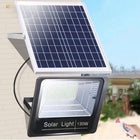
The current NoxLumin Outdoor Solar Motion Sensor Wall Light uses an extruded aluminum-alloy main housing instead of a plastic housing. The surface is sandblasted and anodized to provide a matte finish and improve resistance to corrosion and abrasion. The current product is listed in 450-, 900-, and 1,100-lumen versions, with an integrated solar panel, PIR motion detection, four active lighting modes plus Manual Off, and an IP65 enclosure rating.


Housing material, IP rating, output, modes, and solar charging answer different questions. Buyers comparing the Solar Wall Lights collection should not treat any single feature as proof of total outdoor performance. For placement, use the sunlight, mounting height and PIR pre-installation checklist before drilling.
A Better Housing Checklist
- For aluminum: identify the surface treatment, inspect edges and joints, and check how dissimilar fasteners are isolated.
- For plastic: ask for the resin family, UV stabilization or outdoor rating, tested color and thickness, and retained impact performance after weathering.
- For both: inspect gaskets, seams, sensor and button openings, drainage, bracket rigidity, and cable or solar-panel penetrations.
- Verify the exact IP rating: do not translate “weather-resistant” into a rating the manufacturer has not stated.
- Match the site: account for direct sun, reflected heat, salt, irrigation spray, snow, falling branches, and accidental contact.
- Check the full lighting system: panel exposure, battery capacity, controls, sensor behavior, and replaceability may limit useful life before the housing does.
The Bottom Line
For a permanently installed solar wall light exposed to strong sun and routine outdoor wear, anodized aluminum is usually the better housing choice. Its strongest advantages are rigidity, resistance to UV-driven material aging, and a corrosion-resistant oxide finish. Plastic can still work outdoors, but its quality must be demonstrated through material identification and credible weathering evidence. If that evidence is missing, the risk of fading, chalking, brittleness, cracking, and deformation makes plastic the weaker long-term bet.
Frequently Asked Questions
Which housing is better for an outdoor solar wall light?
Do plastic solar wall lights become brittle in sunlight?
Does anodized aluminum rust?
Does IP65 mean a solar wall-light housing will not age?
Are aluminum solar wall lights suitable near the coast?
Does an aluminum housing make a solar wall light brighter?
What should I check besides housing material?
Get more NoxLumin guides on Google
Add NoxLumin as a Preferred Source to help Google show you more of our outdoor lighting guides in Search and AI experiences.


Leave a comment