On-body control solar lights illuminating a modern home deck and garden at dusk On-body control solar lights illuminating a modern home deck and garden at dusk
Filter

    Simple Local Control

    On-body switches and buttons keep operation simple and remove the need for a separate remote. They work well when the light is mounted where setup controls remain easy to reach.

    Mounting Height Matters

    For lights mounted high on walls or poles, remote control can be more convenient. For pathway, garden and decorative fixtures near ground level, local controls are usually easy to access and reduce extra components.

    Remote Control Solar Lights for installations above normal reach.

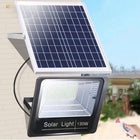
    Solar Lights with Integrated Solar Panel for simple all-in-one solar fixtures.

    FAQ

    • Choose the wall light for entries, the adjustable ground-stake light for trees or landscape targets, disk lights for path edges, and a portable lantern for a table or campsite. On-body control describes where the button is located; it does not indicate the fixture’s brightness or purpose.
    • It is convenient when the light remains within reach, but less so for a high wall or inaccessible panel. Select the desired mode before final mounting and confirm whether automatic operation continues after setup. A remote-controlled model may be easier if frequent changes are expected.
    • A simple switch suits decorative or pathway lights that run one automatic pattern. A multi-mode button is useful on wall lights or lanterns when you need motion, brightness, or color choices. Review the operating sequence because repeated presses can cycle through modes differently on each product.
    • Normally, an enabled solar light with automatic dusk sensing can repeat its selected behavior, but memory and mode logic vary by product. Complete the first charge, switch the unit on, select the desired mode, and test it after dark before assuming the setting is stored.
    • Portable lantern controls remain close at hand, while pathway-light switches may sit beneath the panel and wall-light buttons may be on the housing. Check product images and mounting height. Do not place a fixture where routine mode changes would require unsafe climbing.
    • The fixture has a physical switch or button for on/off, mode, brightness, or color selection. Exact controls vary by model.
    • Usually yes. Dusk sensors, motion modes, and remotes normally work only after the fixture’s physical switch has been turned on.
    • Some products let the button cycle through dusk-to-dawn, motion, constant, color, or brightness modes. Review the model’s sequence.
    • Memory behavior differs. Some retain the last mode, while others return to a default after the switch is turned off or the battery is depleted.
    • Aim for about 6–8 hours of direct sunlight and keep the panel clean and unobstructed.
    • Allow a full charge, confirm any battery tab is removed, press according to the instructions, and inspect the switch area for dirt or water.
    • Keep switches clean, close protective covers, avoid forcing buttons, and do not open a sealed fixture unless the instructions permit service.