Manual on-off outdoor wall light being switched on by hand at a home entrance at dusk Manual on-off outdoor wall light being switched on by hand at a home entrance at dusk
Filter

    When Manual Control Is Useful

    Manual control works well when lighting is used intermittently and you do not want a sensor deciding when the fixture operates. Portable lanterns are a clear example, while some fixed fixtures also provide direct body controls.

    Consider Access to the Switch

    For battery or solar products, manual operation can conserve stored energy because the light only runs when needed. If a fixture is mounted high or far away, remote control can be more practical than a physical switch.

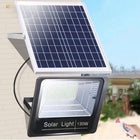
    On-Body Control Solar Lights for local fixture controls.

    Camping lights for portable manually controlled lighting.

    FAQ

    • Choose the hardwired bollard for a permanent path or courtyard, a rechargeable lantern for portable patio or camping use, the 14,000 mAh telescopic lantern for high-output work areas, and the hardwired long-strip sconce for a modern wall fixture. Manual control does not mean the products share a power source.
    • They require a suitable AC installation and a planned control method, which may be a wall switch or a supported dimming arrangement depending on the selected model. Have a qualified installer confirm wiring, outdoor protection, and control compatibility before purchase or installation.
    • Choose a lantern when you need to move light between a campsite, table, vehicle, garage, or outage area. Choose a bollard or wall sconce for a permanent architectural location. Portable lights require charging and stable placement; fixed hardwired lights require electrical work but do not need battery recharging.
    • It can be used at a lower setting, but its 6,000-lumen maximum, magnetic base, and telescopic design are oriented toward work, fishing, larger campsites, and emergency use. A dimmable vintage lantern is generally more comfortable for a small table or close conversation area.
    • Choose a model with an appropriate timer or automatic function instead of relying on a purely manual routine. For rechargeable lanterns, use a lower setting and return the unit to its charging location after use. For hardwired fixtures, discuss compatible controls with the installer rather than adding unsupported accessories.
    • The user selects on/off or an operating mode through a physical switch, touch control, or remote rather than relying only on dusk or motion automation.
    • Yes. Some products let you manually choose a timer, motion, dusk-to-dawn, or constant mode. Available combinations vary.
    • The collection can include solar, rechargeable, and hardwired products. Check charging or wiring requirements before installation.
    • Memory behavior differs. Some retain the previous setting, while others return to a default after power loss or main-switch shutdown.
    • Yes. A remote may adjust on/off, brightness, color temperature, timers, or modes, but commands and range vary by model.
    • Use a timer or automatic mode when available, select lower brightness, or create a routine for switching it off.
    • Confirm power or charge, inspect the main switch, check the remote battery and line of sight, and reset the mode according to the instructions.