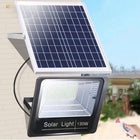
High-capacity solar area lights illuminating a wide driveway and gated property entrance at night High-capacity solar area lights illuminating a wide driveway and gated property entrance at night
Filter

    When High Battery Capacity Is Useful

    High-capacity batteries are most useful when matched with a solar panel large enough to recharge them and a control strategy appropriate for the application. Flood, wall and larger-area fixtures may prioritize high output, while other products use capacity to extend lower-power operation.

    Operating Mode Changes Runtime

    Check whether the product is intended for continuous dusk-to-dawn operation, motion-triggered lighting, timed use or manual control. Those modes can produce very different real-world runtime from the same nominal battery capacity.

    Solar Flood & Security Lights for brighter area and security lighting.

    Solar Lights for Large Yards & Driveways for larger coverage requirements.

    FAQ

    • Use a 6,000 mAh motion wall sconce for entrances and patios, a 6,800 mAh integrated commercial-style light for broader yard illumination, the 25,000 mAh dual-panel flood for the highest-output zones, and the COB rope system for long decorative outlines. Battery size does not replace fixture-type selection.
    • Not necessarily. It is aimed at high-output, large-zone lighting and may be excessive for a porch or narrow side yard. A 1,400-lumen wall sconce or another smaller motion light can be more appropriate near doors. Choose according to mounting height, area, glare control, and required operating mode.
    • An integrated commercial-style light packages the panel and lamp together for simpler installation where the whole unit receives sun. A dual-panel flood provides more panel area but needs space and orientation for both panels. Compare mounting structure, sun exposure, and control options, not just capacity.
    • No. A larger battery stores more energy, but it still must be recharged by adequate daylight. Persistent shade, a poorly angled panel, snow, dirt, or short winter days can leave even a high-capacity unit undercharged. A separate-panel model can help only if the panel can reach a sunnier position.
    • Use motion when bright output is needed mainly for arrivals or security events, and a timer when a predictable evening window matters. Continuous maximum output consumes the most energy. Choose a mode that matches traffic and desired hours so stored energy is used where it adds value.
    • It can support high-output or extended-runtime commercial, flood, security, and large-area lighting when paired with a suitable panel and efficient modes.
    • Not automatically. Maximum output may still consume energy faster than the panel can replace it, especially after cloudy days.
    • Compare voltage, watt-hours when available, LED power, panel wattage, charge time, runtime by mode, and standby consumption.
    • Charging depends strongly on panel size and sun conditions. A large battery can require multiple hours of strong sunlight.
    • Motion, timers, and reduced standby output normally last longer than continuous full brightness.
    • Short days and cloud reduce charge, while cold reduces available battery output. Adjust modes and keep panels clear of snow.
    • Keep the panel clean, avoid extreme heat, prevent deep discharge during storage, and follow model-specific battery service instructions.