Solar lights for shed and garage featuring a split-design solar pendant light illuminating a backyard workshop and a motion sensor solar wall light at a residential garage entrance Solar lights for shed and garage featuring a split-design solar pendant light illuminating a backyard workshop and a motion sensor solar wall light at a residential garage entrance
Filter

    How to Choose Solar Lights for a Shed or Garage

    For Inside a Shed, Workshop, or Detached Garage

    The most direct solution is a split-design light with the solar panel installed outdoors and the lamp installed indoors. The Split-Design Solar Pendant Light is designed for this type of setup, with an outdoor panel connected to an indoor pendant lamp. This avoids relying on sunlight reaching the lamp itself and is useful for storage sheds, workshops, and garages without convenient mains power.

    For a Garage Door, Side Entrance, or Shed Doorway

    Choose a motion-sensor wall light when the main goal is automatic illumination as someone approaches. Models such as the 112 LED Solar Wall Light with Motion Sensor and the Solar LED Wall Light with Motion Sensor are better suited to entrances, garage doors, side yards, and access points where hands-free lighting and security visibility matter.

    For Shaded Walls or Covered Installation Areas

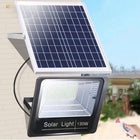
    If the lamp must be installed where the wall receives limited direct sun, a separate solar panel can be placed in a sunnier location while the light stays where illumination is needed. See our Solar Lights with Separate Solar Panel collection for additional options.

    For Larger Garage Approaches and Surrounding Yards

    Use higher-output solar spotlights or flood lights when you need broader coverage around a garage, driveway, workshop exterior, or detached building. These products are intended for area lighting rather than soft decorative illumination, so compare beam coverage, installation height, sensor behavior, and solar-panel placement before choosing.

    Solar Panel Placement Matters

    Solar performance depends heavily on panel exposure. Install the panel where it can receive strong direct sunlight during the day, and avoid deep shade from roofs, trees, fences, or nearby buildings when possible. A separate-panel system is especially useful for covered garages and sheds because the panel and the lamp do not need to occupy the same location.

    Motion Sensor, Timer, or Dusk-to-Dawn?

    Motion sensor: best for entrances, garage doors, side doors, and security-focused areas where brighter light is mainly needed when someone approaches.

    Timer control: useful for interior shed or workshop lighting when you want the light to remain on for a defined period.

    Dusk-to-dawn: useful for exterior visibility where automatic nighttime operation is more important than motion-triggered brightness.

    The correct control method depends on whether the space is used for storage, active work, vehicle access, or security. For more motion-activated choices, browse Motion Sensor Solar Lights.

    Related Solar Lighting Categories

    Solar Wall Lights for doors, walls, garage facades, and exterior entrances.

    Solar Flood & Security Lights for brighter coverage around driveways, yards, and larger exterior areas.

    Solar Lights with Separate Solar Panel for shaded or indoor lamp locations where the panel needs a sunnier mounting point.

    Motion Sensor Solar Lights for automatic entrance and security lighting.

    Use this guide to narrow the products above by installation location, required brightness, control method, and solar-panel exposure.

    FAQ

    • Use the 800-lumen split pendant inside a shed or covered garage bay with its panel outdoors. Use a 450–1,500 lumen motion wall light at a door or side entrance, and a higher-output spotlight or flood for a larger exterior work or driveway zone.
    • Yes for the split-design pendant and other products specifically built with a separate panel and cable. Measure the route, choose a weather-appropriate cable entry, and keep the panel in direct sun. Do not assume an integrated wall light can charge reliably inside a shed.
    • Use motion for brief arrivals and security, a timer for a planned work or evening window, and dusk-to-dawn for a steady background level where the battery and daily sun support it. For an interior shed, choose the split pendant variant whose control behavior matches how the space is used.
    • A focused 800-lumen pendant can serve a defined small interior, while a garage approach may use roughly 450–1,500 lumens depending on area and mounting. Long driveways or broad work zones may need multi-thousand-lumen floods or several fixtures. Beam and shadows matter as much as lumens.
    • Use a separate-panel design and place the panel on a sunnier roof face, wall, or nearby support within cable reach. Test seasonal shading from trees and rooflines. If no panel location receives enough sun, a solar light may not meet the required reliability and a wired solution may be better.
    • Yes. For enclosed spaces, use a split-design solar light with the solar panel mounted outdoors in direct sunlight and the lamp installed inside. This lets the panel charge normally even when the shed or garage interior receives little or no sunlight.
    • For general interior lighting, a separate-panel pendant light is usually the most practical choice because the panel can stay outdoors while the lamp hangs inside. For entrances or occasional access, a motion-sensor wall light may be more appropriate.
    • A motion-sensor solar wall light is usually the best fit for garage doors, side entrances, and shed doorways because it can provide automatic light when someone approaches. Choose brightness and sensor modes based on the size of the area and how much security visibility you need.
    • Install the panel where it receives strong direct sunlight during the day. Avoid deep shade from roofs, trees, fences, or nearby buildings. If the lamp needs to be under a roof or inside a shed, choose a model with a separate solar panel so the panel can be mounted in a sunnier location.
    • There is no single lumen level for every space. A compact shed used for storage can use lower output than a garage work area or driveway approach. For task-oriented interior lighting, prioritize even coverage near the work area; for exterior security and vehicle access, use higher-output wall, spotlight, or flood lighting.
    • Use motion sensing for entrances and security, timer control when you want an interior light to stay on for a defined period, and dusk-to-dawn operation for exterior areas that need automatic nighttime visibility. Some products support more than one control mode.
    • They can still operate, but charging and runtime depend on available sunlight, battery capacity, brightness settings, season, and weather. Keep the solar panel clean and positioned for the best sun exposure, and expect shorter runtime after cloudy or short winter days.