


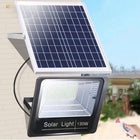


What Does mAh Mean on a Solar Light? Battery Capacity, Runtime, and Charging Explained

mAh tells you how much electrical charge a solar light's battery is rated to hold; it does not tell you how bright the light is or guarantee a specific number of operating hours. To judge likely runtime, compare battery capacity with nominal voltage, light output, operating mode, solar-panel input, charging conditions, and the manufacturer's conditional runtime statement.
Key takeaways
- mAh means milliampere-hours. It is a charge-capacity rating, not a brightness or runtime rating.
- Voltage matters. Batteries with the same mAh rating can store different amounts of energy when their nominal voltages differ.
- The load matters. A 50-lumen path light and an 800-lumen pendant can use the same battery very differently.
- Controls matter. Constant high output normally consumes more energy than dim-to-bright, motion-only, or timed operation.
- Charging matters. A large battery cannot provide its full reserve after a day of weak or obstructed solar charging.
What does mAh measure on a solar light?
Battery capacity shown in mAh describes electric charge. One thousand milliampere-hours equals one ampere-hour: 1000mAh = 1Ah. This number becomes more useful when the battery's nominal voltage is also available.
Current U.S. transportation regulations define the same standard relationship: watt-hours equal ampere-hours multiplied by nominal voltage. In short, Wh = Ah × V. Watt-hours are a better approximation of stored energy than mAh alone because they include voltage. See the 49 CFR 171.8 definition of watt-hour ratings.
For example, the three battery tiers in NoxLumin's outdoor solar motion sensor wall light are all listed at 3.2V:
- 1500mAh: 1.5Ah × 3.2V = approximately 4.8Wh
- 3000mAh: 3.0Ah × 3.2V = approximately 9.6Wh
- 6000mAh: 6.0Ah × 3.2V = approximately 19.2Wh
Those figures are nominal energy estimates, not guaranteed usable nighttime output. The light's electronics, battery protection, conversion losses, temperature, battery condition, and selected operating mode affect how much of that energy reaches the LEDs.

Why can't mAh predict solar-light runtime by itself?
Brightness and electrical load are different from capacity
Lumens describe visible light output; mAh describes battery charge. Neither number directly states the fixture's average electrical power draw. The U.S. Department of Energy notes that lighting energy use depends on more than the LED source alone, including fixture design, the power supply, and other features. That is why two lights with similar lumen ratings can still have different runtimes. See the DOE's LED Basics.
Operating modes change the average load
A motion light that remains off until activity is detected may use much less nighttime energy than the same fixture running continuously at high output. Dim-to-bright operation creates an intermediate load: the light consumes some energy all night, then more during each motion event. Timer settings can cap the operating period, while a dusk-to-dawn light attempts to run until daylight or until its available charge is depleted.
This is why "6000mAh" cannot be translated into a fixed number of hours without knowing the average load. Even within one fixture, frequent motion activations or manual continuous high output can shorten runtime substantially.
A rated battery is useful only when it is charged
The solar panel must replace the energy used the previous night. The Department of Energy explains that solar production varies with season, time of day, clouds, dust, haze, shadows, rain, snow, and dirt. The same input constraint applies to a small solar-light panel: a 6000mAh battery may finish a cloudy or shaded day only partly charged. See the DOE's Solar Energy and Storage Basics.
If the installation area is shaded, read Do Solar Lights Work in the Shade? before choosing an integrated-panel light. For motion lighting, the pre-installation sunlight, height, and PIR checklist helps test charging and detection before drilling.
Battery condition and system losses reduce usable energy
Rated capacity describes a new battery under specified conditions. Aging, protection circuits, and conversion losses reduce the energy available to the LEDs, so treat runtime as conditional rather than permanent.
How do real solar-light specifications compare?
The examples below are not equivalent products and were not measured in one side-by-side laboratory test. They show why capacity must be interpreted together with the job, output, controls, panel design, and listed charging conditions.
| Use case and product | Battery | Output and controls | Listed charging and runtime | What the specification teaches |
|---|---|---|---|---|
| Warm-white pathway guidance | 800mAh; | 50 lumens per fixture; dusk-to-dawn | About 6–8 hours of direct sun; about 8–12 hours after a full charge | A modest battery can support a low-output, localized lighting job. Do not compare its mAh directly with a higher-output fixture when voltage and load differ. |
| Tree and landscape accent lighting | 2200mAh; | 180 lumens; High and Medium modes; 5°–90° adjustable beam | About 6–8 hours of direct sun; 8+ hours after a full charge | Beam control and output mode influence how effectively the stored energy is used for a targeted feature. |
| Garage, doorway, or patio motion lighting | 3.2V; 1500, 3000, or 6000mAh by output tier | 450, 900, or 1,100 lumens; four active modes plus Off | About 6 hours of strong direct sun under favorable conditions; nighttime runtime varies by mode and motion activity | Capacity increases alongside output within a matched product family. The mode still determines whether the extra reserve supports longer operation, higher output, or both. |
| Shed or garage overhead lighting | 4400mAh; | Up to 800 lumens; dimming; motion or timer variant | 5V/4.5W separate panel; about 8–10 hours of suitable direct sun; 10–14-hour runtime | The separate panel, brightness setting, and motion or timer logic are as important as the battery number for a covered space. |

How should you compare two solar lights?
- Start with the lighting job. Decide whether you need path guidance, accent lighting, overhead task light, or motion-responsive area lighting.
- Compare useful light output and beam pattern. A narrow 180-lumen spotlight and a wide 180-lumen fixture will not illuminate the same target in the same way.
- Check both mAh and voltage. If voltage is available, convert the rating to approximate watt-hours. If voltage is missing, do not make a precise energy comparison.
- Read the control logic. Look for constant, dim-to-bright, motion-only, dusk-to-dawn, timer, and brightness settings.
- Check the solar input. Review panel wattage when provided, integrated versus separate-panel design, required direct-sun hours, and whether the mounting point can actually receive that sun.
- Use the listed runtime with its conditions attached. "Up to" or "after a full charge" is not the same as guaranteed performance after shade, winter weather, or repeated high-output use.
Which capacity fits each outdoor lighting job?
Pathways and garden edges
Prioritize local output, dusk-to-dawn control, spacing, and panel exposure. The current 50-lumen pathway light pairs an 800mAh battery with an 8–12-hour listed runtime after full charging. This shows why a low-output fixture may not need the largest battery; it does not prove that 800mAh suits every path light.


Trees and landscape focal points
Beam direction can matter more than maximum capacity. The 2200mAh tree spotlight concentrates 180 lumens through a 5°–90° beam with High and Medium modes. Accurate aiming avoids spending light and energy outside the intended feature.


Garage entrances, side doors, and patios
Choose the output tier and operating behavior together. The 3.2V wall-light family pairs 1500mAh with 450 lumens, 3000mAh with 900 lumens, and 6000mAh with 1,100 lumens. Off-to-bright mode favors conservation between events; constant or manual high output places a much heavier demand on the battery.


Sheds, detached garages, and covered work areas
Panel location can be the deciding factor. The 4400mAh split pendant places a 5V/4.5W panel outdoors and connects it to the lamp with a 16.4 ft cable. That layout can be more useful than a larger integrated battery installed where the panel remains shaded. Browse solar lights with separate panels when the light and the charging point need different locations.


Common mistakes when reading battery specifications
- Assuming twice the mAh means twice the runtime. That is only a reasonable starting hypothesis when voltage, load, efficiency, mode, battery condition, and charging state are comparable.
- Comparing different product categories by mAh. A portable lantern, path light, security light, and shed pendant serve different loads and control patterns.
- Ignoring panel placement. A larger battery is not an advantage if the panel cannot replenish it.
- Treating peak lumens as an all-night setting. Motion fixtures may reach peak output only during events, while constant modes create a different energy demand.
- Reading a runtime range without its test conditions. Look for direct-sun requirements, brightness settings, motion frequency, season, and the phrase "after a full charge."
Bottom line
Use mAh as one part of a system-level comparison. Match the light to the job, then compare voltage or watt-hours, output, beam, modes, panel design, charging requirements, and conditional runtime. Nighttime performance depends on both energy stored and energy consumed.
Frequently asked questions
Does a higher mAh battery make a solar light brighter?
Does 6000mAh mean a solar light will run all night?
Can I compare two solar lights by mAh alone?
How do I convert mAh to Wh?
Why does a solar light run for less time in winter or cloudy weather?
Which lighting mode usually uses the least battery power?
Get more NoxLumin guides on Google
Add NoxLumin as a Preferred Source to help Google show you more of our outdoor lighting guides in Search and AI experiences.


Leave a comment