Solar wall light with an integrated solar panel illuminating a modern home exterior at dusk Solar wall light with an integrated solar panel illuminating a modern home exterior at dusk
Filter

    How to Choose Solar Wall Lights

    Start with the job the wall light needs to do: automatic security lighting, everyday entrance lighting, or decorative accent light. Then compare sensor behavior, useful beam coverage, panel exposure, mounting height, and weather rating rather than choosing from LED count alone.

    Best for Garage Doors and Entrances

    For approach lighting where brighter output is mainly needed when someone arrives, the 112 LED Solar Wall Light with Motion Sensor is a practical motion-focused option. Aim the sensor toward the normal approach path and avoid mounting positions where nearby obstacles repeatedly trigger it.

    Best for Porch and Patio Walls

    For a more architectural wall-light format with motion sensing, compare the Elegant 1400LM Solar Wall Sconce. This style is better suited to entrances and outdoor living areas where fixture appearance matters as well as functional light.

    Best for Decorative Wall Effects

    For lower-output accent lighting, the 10 LED Up-and-Down Solar Wall Light creates a different effect from a security fixture. Use decorative wall lighting where visual pattern and ambience matter more than broad-area illumination.

    Motion Sensor vs Dusk-to-Dawn vs Decorative Lighting

    Motion-sensor lights concentrate brighter output around activity and are useful at doors, garages, and side entrances. Dusk-to-dawn operation suits locations that need steady nighttime visibility. Decorative wall lights can use lower output because their main job is to shape the appearance of a wall, fence, or patio rather than illuminate a large area.

    Integrated vs Separate Solar Panels

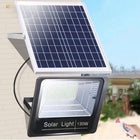
    Integrated-panel wall lights are simplest when the mounting surface receives useful daylight. Under eaves or on shaded walls, a separate-panel design can keep the lamp in the preferred position while moving the panel toward stronger sun. Compare the options in Solar Lights with Separate Solar Panel when the wall itself is not a good charging location.

    Key Buying Factors for Solar Wall Lights

    Compare useful lumen output and beam spread, sensor range and mode behavior, panel orientation, battery capacity, mounting height, fixture dimensions, and the product-specific weather rating. Higher nominal output is not automatically better near windows, narrow walkways, or seating areas where glare may become uncomfortable.

    Related Solar Wall Lighting Categories

    For sensor-focused exterior lighting, browse Motion Sensor Solar Lights. For wider security coverage, see Solar Flood & Security Lights. For outdoor living areas, browse Solar Porch & Patio Lights. For garages and outbuildings, see Solar Lights for Shed & Garage.

    FAQ

    • Choose the 60-lumen warm/RGB model for fence decoration, a 450–1,500 lumen motion wall light for a porch or garage approach, and a 2,000–8,000 lumen commercial-style or flood model for larger zones. The 10-LED up-and-down model is an architectural accent, not broad security lighting.
    • Choose one when the lamp must face a doorway, yard, or shaded wall but the solar panel can be mounted in a sunnier direction within cable reach. Integrated wall lights are simpler where the fixture itself receives direct sun. Plan the panel location before drilling for the lamp.
    • Match output to distance and area. Lower-output decorative lights suit railings and close seating, while roughly 450–1,500 lumen motion models fit many entry zones. Reserve multi-thousand-lumen floods for larger yards or higher mounting, and aim them away from windows and neighbors.
    • Look at the 112-LED, 1,000-lumen, 1,400-lumen, 1,500-lumen, and selected 450–1,100 lumen models, then compare their exact modes and beam. Decorative fence and up-and-down fixtures are not equivalent. Choose the sensor pattern, brightness, and battery for the intended approach. after dark.
    • An integrated model may undercharge there. A separate-panel model can work if the lamp stays under the overhang while the panel reaches direct sun and the cable can be routed safely. If neither panel arrangement receives adequate sunlight, use a suitable hardwired wall fixture instead.
    • Use decorative models for ambiance, motion models for entrances, spotlights for focused features, and flood models for broad security coverage.
    • Follow the model’s output and sensor recommendation. Decorative sconces are lower; security lights are generally higher for coverage.
    • Aim the sensor across the expected approach rather than directly at the ground or sky. Keep plants, vents, traffic, and reflective surfaces outside the detection zone where possible, then test the selected solar wall light after dark before final tightening.
    • Integrated models need sun at the wall location. Separate panels can be moved to a sunnier position. Aim for about 6–8 hours of direct sun.
    • Lower output suits fences and patios, medium output suits doors and small yards, and higher output suits garages and driveways.
    • Many are IP65 or IP67, but ratings vary. Seal mounting holes and connectors and prevent water collection behind the fixture.
    • Many screw-mounted solar fixtures are suitable for careful DIY installation on a sound surface. Heavy or elevated fixtures may need professional help.