Residential outdoor lights illuminating a modern home entrance, garden path and trees at dusk Residential outdoor lights illuminating a modern home entrance, garden path and trees at dusk
Filter

    How to Plan Residential Outdoor Lighting

    Divide the property into pathways, entrances, outdoor living areas, landscape features, and security zones. Each area benefits from a different combination of beam shape, brightness, mounting height, control method, and power source.

    Best for Paths and Ground-Level Guidance

    For low-profile walkway and driveway edges, the 8-LED Solar Disk Pathway Lights can mark routes and transitions without requiring fixed electrical wiring.

    Best for Entrances and Exterior Walls

    For an automatic solar option at doors and garage approaches, compare the 112 LED Solar Wall Light with Motion Sensor. Where a permanent electrical connection is preferred, the Dimmable Outdoor LED Wall Light represents a hardwired-style alternative in this collection.

    Best for Trees and Landscape Features

    For directional accent lighting without trenching, the High-Power Solar Tree Light can be aimed toward trunks, canopies, statues, and other landscape features.

    Solar vs Hardwired vs Rechargeable Outdoor Lights

    Solar lights avoid fixed wiring but depend on panel exposure and stored energy. Hardwired fixtures suit permanent locations with a suitable electrical connection and do not depend on daily solar charging. Rechargeable portable lights add flexibility for temporary use but require periodic charging. Choose the power source from the installation first, not from fixture appearance alone.

    Functional, Security, and Decorative Layers

    Use functional light at paths, steps, doors, and work areas; stronger or motion-triggered light at security-sensitive approaches; and lower-output decorative light around patios, fences, and planting. Layering these roles usually produces a more usable property than applying one fixture type everywhere.

    Key Buying Factors

    Compare the intended location, beam pattern, lumen output, glare risk, mounting height, controls, weather rating, fixture dimensions, and power requirements. For solar products, also check panel exposure and battery system. For mains-powered products, confirm voltage, wiring, mounting, and installation requirements on the individual product page.

    Related Residential Outdoor Categories

    For solar-only home lighting, browse Residential Solar Lights. For no-fixed-wiring exterior options, see Outdoor Lights Without Wiring. For permanent mains-powered fixtures, browse Hardwired Outdoor Lighting. For entrance lighting, see Solar Wall Lights. For ground-level routes, browse Solar Pathway & Garden Lights.

    FAQ

    • Plan the hardwired bollard, hardwired long-strip sconce, permanent wall mounts, panel brackets, and rope-light cable routes early. Ground stakes and portable lanterns can be positioned later. Early planning helps conceal conduit, provide stable bases, preserve sunny panel locations, and avoid drilling finished surfaces twice.
    • Solar wall, pathway, decorative, tree, rope, lantern, and split-panel models avoid a household lighting circuit. The long-strip wall sconce and AC bollard are hardwired permanent fixtures. Verify each product’s power source; a no-wire solar installation can still require drilling or secure exterior mounting.
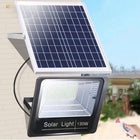
    • Use a separate-panel pendant, spotlight, or selected flood model when the lamp must remain under cover but the panel can reach sun. An integrated solar fixture is a poor fit where its panel stays shaded. A hardwired wall light may be better when dependable solar exposure is unavailable.
    • Portable lanterns, ground stakes, disks, and some removable no-wire options are easier to relocate than hardwired fixtures. Wall lights may still require holes and approval, while rope systems need secure attachment and panel placement. Check lease rules and use mounting methods appropriate for the surface and weather.
    • Place brighter motion lighting at doors or garage approaches, add warm path markers for navigation, and use a limited number of tree, fence, rope, or decorative fixtures as accents. This layered approach avoids asking one product to provide security, route guidance, and decoration at the same time.
    • Assign fixtures by zone: pathways for navigation, decorative lights for ambiance, wall lights for entrances, spotlights for landscape features, and motion or flood lights for security.
    • There is no fixed number. Cover entries, steps, paths, patios, fences, driveways, and dark landscape areas without creating excessive glare.
    • Solar suits sunny locations without wiring. Hardwired fixtures provide consistent permanent power. Rechargeable models provide portability.
    • Warm white is welcoming, neutral white balances comfort and visibility, and cool white increases contrast. RGB and flame effects are decorative.
    • Aim lights downward or toward the target, use an appropriate beam and brightness, and avoid shining high-output fixtures into windows.
    • Ratings and materials vary. Cold weather can reduce battery output, short winter days reduce solar charging, and coastal areas require corrosion attention.
    • Clean panels and lenses, trim plants, inspect mounts and seals, test sensors, and service damaged batteries or wiring.