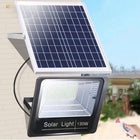
Solar wall and landscape lights illuminating a side yard and walkway with 2,000 to 3,999 mAh battery systems Solar wall and landscape lights illuminating a side yard and walkway with 2,000 to 3,999 mAh battery systems
Filter

    Mid-Capacity Solar Lighting

    A 2,000–3,999mAh battery can suit wall, spotlight and sensor-driven lighting, but capacity alone does not guarantee all-night high-brightness operation. Energy use rises with output and active time.

    Compare Sensor and Beam Behavior

    For entrances and security areas, check how the sensor changes brightness and how long the light remains active after detection. For spotlights, compare beam angle and panel placement. These factors can matter more than a small difference in battery capacity.

    Motion Sensor Solar Lights for sensor-focused applications.

    Solar Lights with 4000–5999 mAh Battery for larger-capacity systems below 6,000mAh.

    FAQ

    • This range currently focuses on wall-mounted motion lights and an adjustable tree or landscape light. It suits entrances, address areas, patios, and targeted uplighting where output is intermittent or directional. It is not the same category as low-output path markers or very high-output commercial flood lights.
    • Choose a wall model to illuminate a doorway, garage face, address, or nearby approach. Choose the ground-stake tree light when the goal is to aim upward at a trunk, canopy, statue, or landscape feature. Their battery range may overlap, but their mounting position and beam direction solve different problems.
    • Motion modes reserve energy for arrivals or activity, allowing a moderate battery to deliver higher brightness when needed. Dim-to-bright adds a low background level but consumes more energy than off-to-bright. Compare the exact modes and selected output on the product page before estimating nightly performance.
    • It can be appropriate for a defined entrance or approach when the panel receives useful sun and motion activation limits full-output time. Suitability depends on mounting height, beam spread, traffic frequency, and desired coverage. For a wide driveway or large yard, consider multiple fixtures or a higher-output category.
    • Confirm the selected variant’s battery capacity, lumen output, light color, panel design, and number of LEDs. Some wall-light listings span several battery sizes, so the title may show the maximum available rather than the specification of every option. Use the variant details as the final reference.
    • It indicates nominal stored charge and commonly supports mid-capacity wall, spot, and motion-sensor lighting. Voltage and system efficiency also matter.
    • No. LED power, brightness, standby use, motion triggers, panel size, and charging conditions can offset the capacity advantage.
    • Use the product-specific runtime. Mode, weather, season, temperature, and state of charge all affect performance.
    • Charging depends on panel wattage, sun intensity, panel angle, battery state, and temperature. Exact time varies by model.
    • Motion-triggered, lower-brightness, or shorter timer modes normally conserve more energy than continuous maximum output.
    • Cold reduces available capacity, high heat accelerates aging, and cloud or shade reduces charging.
    • Only when the product design permits it. Use the specified chemistry, voltage, size, and connector.