


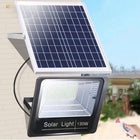


PIR vs Radar Motion Sensor Solar Lights: Which Is Better for Garages, Porches, Gates & Driveways?

Quick answer: PIR and radar motion sensors use different detection principles, but the sensor label alone does not tell you which solar light will have the wider or longer detection zone. In NoxLumin's current range, one PIR wall light is listed at 120° and 5–8 m, another PIR wall light is listed at more than 180° and 5–10 m, while the radar wall/pillar light is listed at 180° and a typical 5–10 m. Compare the complete fixture—sensor technology, sensing angle, sensing distance, mounting position, solar exposure, operating mode and light output.
A motion-sensor solar light can look simple from the outside: someone approaches, the light reacts, and the area becomes easier to see. What happens before the light switches or brightens, however, depends on the sensing technology inside the fixture.
Two terms commonly appear in outdoor-light specifications: PIR and radar or microwave motion sensing. They are not two names for the same detection method. But they also should not be turned into a shortcut such as “radar is always better” or “PIR always has a shorter range.”
This guide explains the difference and compares three current NoxLumin solar wall lights for garages, porches, gates and driveways.
PIR vs Radar Motion Sensors: Quick Comparison
| Decision factor | PIR | Radar / microwave |
|---|---|---|
| Basic principle | Detects changes in infrared radiation within sensing zones | Actively transmits radio-frequency energy and detects changes in reflected signals caused by motion |
| Passive or active | Passive | Active |
| What the technology name tells you | The detection principle | The detection principle |
| What the technology name does not tell you | Exact angle, range, brightness, mounting suitability or control behavior | Exact angle, range, brightness, mounting suitability or control behavior |
| Best buying method | Compare the actual fixture specifications and test the installed detection zone | |
Wikipedia's overview of passive infrared sensors explains that a PIR sensor measures infrared radiation from objects in its field of view and is called “passive” because it does not emit energy for detection. Wikipedia's motion detector overview distinguishes passive infrared detection from active technologies such as microwave detection.
How Does a PIR Motion Sensor Work?
PIR stands for passive infrared. The sensor does not actively send an infrared beam toward a person. Instead, it responds to changes in infrared radiation within its field of view.
A typical PIR motion detector uses optics—often a segmented Fresnel lens—to create multiple sensing zones. When a warm body moves across those zones, the changing infrared pattern can trigger the detector. This is why the physical sensor design and the direction of movement relative to its sensing zones can matter.
That also explains an important shopping point: two fixtures can both use PIR technology and still have very different listed sensing angles and distances.
The PIR label identifies the basic detection method. It does not standardize the lens, field pattern, sensitivity, mounting height or control logic of every PIR fixture. Wikipedia's PIR article describes how lens and detection-zone arrangements shape the sensor's practical field of view. Therefore, the actual angle and distance published for a specific light are more useful for installation planning than the three-letter sensor abbreviation alone.
How Does a Radar or Microwave Motion Sensor Work?
Radar or microwave motion sensing is an active detection method. Instead of waiting for infrared changes, the sensing system transmits radio-frequency energy and evaluates changes in the returned signal when objects move.
Wikipedia describes microwave motion detectors as using the Doppler radar principle. A related explanation appears in Wikipedia's Doppler radar article, where motion changes the characteristics of the reflected signal.
Does Radar Automatically Mean Wider or Longer Detection?
No. Sensor technology alone does not determine the advertised sensing angle or distance.
Compare three current NoxLumin products:
| Product | Sensor | Listed angle | Listed distance | Verified light output | Battery |
|---|---|---|---|---|---|
| 112-LED Solar Motion Sensor Wall Light | PIR | 120° | 5–8 m (16–26 ft) | No verified lumen value in current product data | 2200mAh |
| Outdoor Solar LED Wall Light with Motion Sensor | PIR | More than 180° listed | 5–10 m (16.4–32.8 ft) | Up to 450 / 900 / 1100 lm by version | 1500 / 3000 / 6000mAh by version |
| Solar Radar Motion Sensor Wall & Pillar-Top Light | Radar | 180° | Typical 5–10 m (16.4–32.8 ft) | 1400 lm | 6000mAh |
The 112-LED PIR model has the narrowest listed angle in this comparison. But the other PIR model is listed at more than 180° and up to 10 m—similar on paper to the radar model's 180° and typical 5–10 m.
So it would be incorrect to turn these products into a universal rule that radar always has a wider or longer sensing range than PIR.
A better comparison is:
sensor technology + sensing angle + sensing distance + mounting position + control logic.
Two PIR Solar Lights Can Behave Very Differently
The difference between the two PIR products is especially useful for understanding why the sensor label is not enough.

The 112-LED Solar Motion Sensor Wall Light is listed with a 120° PIR field and approximately 5–8 m (16–26 ft) of detection range. Its compact fixture measures about 7.5 × 6.0 × 1.8 in (190 × 153 × 45 mm), uses an integrated 1.5W / 5V solar panel and contains a 2200mAh rechargeable battery.

By contrast, the Outdoor Solar LED Wall Light with Motion Sensor also uses PIR, but its current specifications list a sensing angle of more than 180° and a 5–10 m (16.4–32.8 ft) sensing distance.


It also comes in three output and battery configurations:
| Version | Listed maximum output | Battery | Listed installation guidance |
|---|---|---|---|
| 24 LED | 450 lm | 1500mAh | Below 2 m |
| 48 LED | 900 lm | 3000mAh | Between 2 and 3 m |
| 60 LED | 1100 lm | 6000mAh | Above 3 m |
Both are PIR fixtures. Yet their listed sensing patterns are substantially different. That is why a buyer should ask not only “Does it use PIR?” but also “What detection pattern has this particular PIR fixture been designed to provide?”
Which Motion Sensor Solar Light Fits a Garage?
A garage can contain several very different lighting zones: a side door, a pedestrian approach, a parked-car area, or a broad driveway-facing wall. Start with the zone that should actually trigger the light.

For a Smaller, Defined Approach Zone
The 112-LED PIR model can make sense near a side door or defined garage entrance where its listed 120° and 5–8 m detection zone covers the expected route.
Its four modes include dim-plus-motion, motion-only bright, constant strong and constant weak.
For a Wider Listed PIR Detection Zone
The 450–1100 lumen PIR wall light is more relevant when you want a wider listed PIR detection area. Its specifications state more than 180° and 5–10 m.
The three output/battery versions also let you choose the lighting requirement separately from the sensing technology. A smaller entrance does not automatically need the 1100-lumen / 6000mAh version simply because all versions use PIR.

For Radar Sensing and Dual Mounting
The 1400-lumen radar wall and pillar light adds a different sensing method and a different physical installation system. It is listed at 180° with a typical 5–10 m range, and it includes both wall-mount and pillar-top accessories.


Its advantage should therefore be described as the complete feature combination—radar sensing, 1400-lumen verified output, 6000mAh battery and dual mounting—not simply as “radar is better than PIR.”
What About a Porch or Front Door?
A porch is usually a smaller, more controlled zone than an open driveway. Precise sensor placement can matter more than maximum advertised range.

If visitors approach through one obvious route, either PIR model can be appropriate when its actual listed sensing zone matches that route. The 112-LED PIR light offers 3000K or 6500K light-color options, while the 450–1100 lumen PIR product provides scalable output and battery configurations.
The radar wall/pillar light provides 4000K or 6000K and can also be installed as a decorative lantern-style wall fixture.
For an entrance, avoid choosing only by maximum output. A very bright response aimed poorly can create glare instead of useful visibility. The light should illuminate your own doorway, steps or approach area without unnecessarily shining toward neighboring windows or the street.
Gate or Pillar: The Radar Model Has a Mounting Advantage
For this specific product comparison, the radar model has a practical advantage that has nothing to do with radar technology: pillar-top hardware is included.

The fixture can be configured as either a wall light or pillar-top light. Its top measures approximately 7.28 × 7.28 in (18.5 × 18.5 cm). Overall height is about 10.24 in (26 cm) in the wall-mounted configuration and about 7.87 in (20 cm) in the pillar-top configuration.
If you have an entrance pillar, gate column or masonry post with direct solar exposure and a structurally suitable top surface, that mounting option can be more important to the purchase decision than the sensing technology itself.
Driveway: Do Not Treat the Sensor Like a Complete Security System
A motion-responsive solar light can improve nighttime visibility around a driveway, but neither “PIR” nor “radar” guarantees detection of every person or vehicle at every angle.
It also does not guarantee:
- Maximum brightness all night
- A certified security-lighting performance level
- Identical sensing under every mounting condition
- Consistent runtime after poor solar charging
- A specific photometric coverage pattern when no photometric data has been supplied
After installation, test the actual area. Walk the expected routes, approach from more than one direction and place vehicles where they normally park. Observe whether the light reacts when useful and whether it also reacts to activity that you would prefer not to illuminate.
This real-site test is more useful than comparing sensor names alone.
Solar Exposure Can Matter More Than PIR vs Radar
All three products discussed in the main comparison use an integrated solar panel. That creates a common limitation: the best sensing location also needs to be a workable charging location.
Before mounting, check:
- Whether the panel receives direct sunlight at the exact installation point
- Whether roof overhangs create deep shade
- Whether trees or shrubs block the panel during part of the day
- Whether parked vehicles or structures shade the fixture
- Whether leaves, dust or snow can cover the panel
- How seasonal sun angle changes exposure
A perfectly aimed sensor attached to a poorly charged solar light is still a poor overall installation.
If the best lighting position is shaded but a nearby sunny location is available, browse Solar Lights with Separate Solar Panel rather than forcing an integrated-panel fixture into the wrong location.
Motion-Only vs Dim-to-High: The Operating Mode Matters Too
Motion sensing determines when the control system reacts. The selected operating mode determines what the light does after that detection.
Motion-Only Bright
The fixture remains off until motion is detected, then turns on or increases to its brighter state. This can conserve stored solar energy where background lighting is unnecessary.
Dim-to-High
A low standby level remains on, then the fixture brightens after motion. This can suit entrances where some continuous orientation light is useful.
Constant Light
A continuous mode can be useful for a planned period, but it uses stored energy differently from motion-responsive operation. Runtime therefore depends on more than battery capacity.
Consider:
- Available solar charging
- Weather and season
- Selected brightness
- How often motion occurs
- Temperature and battery condition
- The selected operating mode
A Better PIR vs Radar Buying Checklist
- Define the trigger zone. Is it a single door, a garage approach, a gate, a patio edge or a broad driveway section?
- Compare the actual sensing angle. In this article's three-product comparison, the listed angles are 120°, more than 180°, and 180°.
- Compare the actual sensing distance. The two broader-range examples are both listed around 5–10 m even though one is PIR and one is radar.
- Choose the required light output. Do not use LED count as a substitute for verified lumen data.
- Check the solar panel position. All three main examples use integrated panels.
- Choose the behavior after detection. Motion-only, dim-to-high and constant-light modes serve different needs.
- Check mounting options and dimensions. A pillar-top installation, for example, can rule one product in or out before sensor technology matters.
- Test the installed zone after dark. Manufacturer specifications are planning tools, not substitutes for an on-site test.
Which of the Three NoxLumin Lights Fits Each Use Case?
| Use case | Product to consider | Why |
|---|---|---|
| Defined garage side-door or compact entry zone | 112-LED PIR Wall Light | Compact housing, listed 120° / 5–8 m PIR zone, four operating modes |
| Wider PIR-monitored garage or entrance area | 450–1100 lm PIR Wall Light | Listed >180° / 5–10 m PIR zone with three brightness/battery configurations |
| Gate pillar or decorative entrance needing wall/pillar flexibility | 1400 lm Radar Wall & Pillar Light | 180° radar sensing, typical 5–10 m, 1400 lm, 6000mAh and two mounting systems |
You can compare more options in Motion Sensor Solar Lights, Solar Wall Lights, Solar Flood & Security Lights and Solar Porch & Patio Lights.
Final Takeaway
PIR and radar motion sensors solve the same general problem using different sensing principles.
PIR responds to changes in infrared radiation as warm bodies move through its sensing zones. Radar or microwave sensing actively monitors changes in reflected radio-frequency signals caused by movement.
But the sensor technology alone does not tell you the actual angle, range, brightness, runtime, mounting suitability or best use case of a finished solar light.
The two PIR products in this guide demonstrate that clearly: one is listed at 120° and 5–8 m, while another is listed at more than 180° and 5–10 m. The radar model is listed at 180° and a typical 5–10 m.
Choose the complete fixture, not just the sensor label.
Compare sensor type, sensing angle, sensing distance, light output, battery, mounting location, solar exposure and operating mode together. Then test the final installation after dark.
Frequently Asked Questions
What is the difference between PIR and radar motion sensors?
Is radar better than PIR for outdoor solar lights?
Do all PIR solar lights have the same detection range?
Does a PIR motion sensor need a clear field of view?
Can a radar motion sensor detect through walls?
Which sensor is better for a garage or driveway?
Do motion sensor modes help a solar light run longer?
Get more NoxLumin guides on Google
Add NoxLumin as a Preferred Source to help Google show you more of our outdoor lighting guides in Search and AI experiences.


Leave a comment