




How to Choose Solar Lights for Trees and Landscape Uplighting
Tree uplighting works best when the fixture, beam, and solar-panel location are chosen for the specific tree or feature. Use a focused adjustable spotlight to create vertical emphasis on a trunk, canopy, statue, wall, or architectural detail.
Focused Uplighting for Trunks, Canopies, and Statues
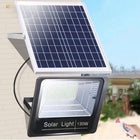
For a defined upward beam, start with an adjustable solar spotlight such as the High-Power Solar Tree Light. Position the fixture where the beam can reach the trunk or feature without shining into windows or neighboring properties. Narrower beams create stronger emphasis; wider beams spread light over broader foliage or architectural surfaces.
Separate Solar Panels for Shaded Planting Areas
Trees and structures often shade the exact location where the light needs to sit. A fixture with a separate panel lets the lamp stay near the tree while the panel moves to a sunnier location. Browse Solar Lights with Separate Solar Panel when panel exposure near the fixture is limited.
Beam Angle, Distance, and Glare
Start with the light close enough to reach the target, then adjust distance and angle to control beam spread. Moving a spotlight farther away generally broadens the illuminated area, while moving it closer produces a tighter, brighter effect. Aim away from eye level and neighboring windows, and test the final position after dark before fixing the stake or mount permanently.
Solar Panel Placement Matters
Solar runtime depends on available charging light, battery capacity, brightness level, weather, and season. Keep the panel clear of dense canopy shade when possible. A landscape light can be positioned for the best nighttime effect while its separate panel is positioned independently for stronger daytime charging.
Related Solar Landscape Categories
For a broader mix of decorative and functional garden lighting, see Decorative Outdoor Lights. For paths and property approaches, browse Solar Driveway & Walkway Lights. For lighting that avoids fixed electrical wiring, see Wire-Free Outdoor Lights.