


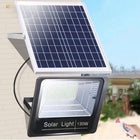


Solar vs USB Rechargeable Camping Lanterns: Which Is Better for Camping and Power Outages?

Quick answer: for most camping trips and home power-outage kits, USB charging is the more predictable primary charging method because you can start with a full battery before you leave home or before severe weather arrives. Solar charging is most useful as a supplemental off-grid option when you have enough direct sunlight. If you want redundancy rather than maximum output, a lantern that supports both solar and USB charging can cover both roles.
The important distinction is that “solar vs USB” describes how the battery is replenished, not how the lantern produces light. Both types are rechargeable LED lanterns. The practical decision is whether you need predictable high-capacity recharging, an off-grid backup source, or both.
Solar vs USB Camping Lanterns: Quick Comparison
| Decision factor | Solar charging | USB charging |
|---|---|---|
| Best role | Supplemental off-grid charging and daytime top-ups | Primary pre-trip and between-use charging |
| Main dependency | Sun exposure, weather, season, panel orientation, and panel size | A compatible USB power source such as wall power, a vehicle adapter, or a power bank |
| Charging predictability | Variable outdoors | More predictable when a powered USB source is available |
| Useful for outages | Yes, especially as a backup after grid power is unavailable | Yes, especially when the lantern was fully charged before the outage |
| NoxLumin example | 130-lumen lantern with USB input plus an integrated solar panel | 6000-lumen lantern with a 14000mAh battery and Type-C input |
Why Solar Charging Is Valuable but Less Predictable
Solar charging has one major advantage: it can add energy when you are away from an electrical outlet. That matters on multi-day campsites, during extended outages, or when you deliberately want fewer cables and adapters in your lighting plan.
But sunlight is not a fixed input. The U.S. Department of Energy explains that available solar radiation changes with geographic location, time of day, season, local landscape, and weather. Clouds and shading can reduce the direct solar energy reaching a panel. That means “solar rechargeable” should not be interpreted as “guaranteed to refill the battery every day.”
Panel size also matters. A compact lantern has limited surface area for an integrated panel, so its solar input should be judged by the manufacturer's verified charging data rather than by the presence of a panel alone. For NoxLumin's 130-lumen solar and USB rechargeable camping lantern, the current product data confirms both USB input and a built-in top solar panel. The safer planning assumption is therefore to use USB for the known starting charge and solar as supplemental replenishment.

Why USB Charging Is Better for a Predictable Starting Battery
USB charging is easier to schedule. Before a weekend trip, you can charge the lantern at home. At an RV site, in a vehicle, or alongside a portable power station, you can recharge again if a compatible powered port is available. For emergency preparation, this predictability is especially useful because the goal is to enter an outage with stored energy already available.
Ready.gov's preparedness guidance lists flashlights, extra batteries, and a portable phone charger among power-outage essentials. The same principle applies to rechargeable lighting: do not make the outage itself the moment when you first try to build your energy reserve. Charge beforehand, then use alternative charging options as backup.
NoxLumin's 14000mAh rechargeable camping lantern is a different class of product from a compact solar lantern. It has a maximum output of 6000 lumens, Type-C input, a 2.5–4 hour listed recharge time, and up to 72 hours of runtime depending on brightness. It also functions as a power bank. Those attributes make wired charging a logical primary strategy because the product is designed around a much larger stored-energy reserve and much higher potential light output.

Battery Capacity Alone Does Not Tell You Which Lantern Lasts Longer
A common buying mistake is to compare only the mAh number. Battery capacity matters, but runtime also depends on the battery voltage, LED power draw, brightness setting, control electronics, and whether the battery is simultaneously powering another device.
That is especially clear in this comparison. The compact dual-charge lantern uses a 1200mAh battery and produces up to 130 lumens, with a runtime of about 3 hours at maximum brightness and up to about 6 hours at lower settings. The high-output lantern uses a 14000mAh battery and can reach 6000 lumens, with runtime varying substantially by brightness and reaching up to 72 hours under lower-demand conditions. The larger battery does not mean you should expect 72 hours at 6000 lumens.


For a purchase decision, compare these four attributes together: maximum output, the brightness you will actually use, published runtime at relevant settings, and charging method. That is more useful than treating battery capacity as a standalone score.
Which Charging Setup Works Better for Weekend Camping?
For a one- or two-night trip with access to home charging before departure, USB should usually be the starting point. A compact solar-and-USB lantern then adds flexibility during the day without forcing you to depend on the sun for the entire trip.
The 130-lumen dual-charge lantern makes the most sense for close-range zones: a small tent, a picnic table, bedside use in an RV, or low-level patio-style lighting. Its 3000K, 4000K, and 5000K settings plus stepless dimming let you trade brightness for comfort and runtime. At about 312 grams, it is also easier to move or hang than a large area-lighting system.
If your campsite includes cooking, equipment setup, nighttime vehicle work, fishing, or a broader RV area, the 6000-lumen model is the stronger task-light option. Its telescopic pole, adjustable light panels, magnetic base, ground fixing pins, and multiple lighting modes are designed for directional and wide-area use. In that case, the most reliable plan is to charge it by Type-C before the trip and use a vehicle or portable battery source if you expect to recharge away from the grid.
Which Setup Works Better for a Home Power Outage?
For outage preparation, think in layers rather than choosing one charging method exclusively:
- Primary reserve: keep the lantern charged before an outage is expected.
- Lighting efficiency: use only as much brightness as the room or task requires.
- Backup input: keep a charged power bank, vehicle charging option, or solar-capable lantern available.
- Battery discipline: if the lantern can charge a phone, reserve enough energy for lighting first.
A high-capacity USB lantern is better when you need strong task lighting, a long reserve at reduced brightness, or device charging. A compact solar-and-USB lantern is better as a secondary light for a bedroom, table, hallway zone, or a backup that can still accept solar energy after other stored power is depleted. In a longer outage, using two different charging pathways can be more resilient than relying on one device and one input method.
Solar + USB vs High-Capacity USB: Two NoxLumin Product Matches
| Product | Charging and battery | Lighting role | Best fit |
|---|---|---|---|
| Vintage Solar & USB Rechargeable Camping Lantern | USB input + integrated solar panel; 1200mAh battery | Up to 130 lumens; 3000K/4000K/5000K; stepless dimming | Small tent, table, bedside, secondary outage light |
| 14000mAh Rechargeable Camping Lantern | Type-C input; 14000mAh battery; power-bank function | Up to 6000 lumens; adjustable panels and multiple modes | RV area, campsite setup, fishing, vehicle work, outage task lighting |
If you want to compare all current portable options in one place, browse the NoxLumin Camping Lights collection. For a separate comparison focused on energy use during blackouts, see our guide to rechargeable camping lantern runtime during a power outage.


Bottom Line
Choose USB charging as your primary method when predictable readiness matters. Choose solar charging as a backup when you need off-grid replenishment. Choose a dual-charge lantern when redundancy matters more than maximum output.
For a short campsite stay, the most practical plan is often to leave home fully charged and let solar extend your options. For high-output work, RV lighting, or emergency backup, a larger Type-C rechargeable battery gives you a more controllable energy reserve. The best lantern is not the one with the biggest battery or the solar panel alone; it is the one whose charging method, realistic runtime, and usable brightness match the way you will actually use it.
Frequently Asked Questions
Is solar charging better than USB for a camping lantern?
Can a solar camping lantern recharge fully on a cloudy day?
Should I fully charge a rechargeable lantern before a camping trip?
Is a 1200mAh battery enough for a camping lantern?
Is a 14000mAh lantern better for power outages?
Get more NoxLumin guides on Google
Add NoxLumin as a Preferred Source to help Google show you more of our outdoor lighting guides in Search and AI experiences.


Leave a comment