


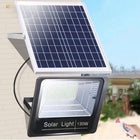


Can Solar Lights Lower Bills and Beautify Your Yard?

Yes—solar lights can reduce the grid-electricity cost of outdoor lighting and improve curb appeal at the same time, especially when they replace a new wired installation. They can be a fast-payback outdoor investment when they avoid both ongoing electricity use and the upfront work of adding cable, outlets or trenches. The exact payback period still depends on the alternative installation cost, local electricity rate, daily operating time, sunlight and product life.
The U.S. Energy Information Administration’s latest monthly data, released August 26, 2026, put the national residential average at 18.34 cents per kilowatthour in June 2026—5.0% higher than June 2025. Year-to-date pricing averaged 18.16 cents, versus 16.91 cents year-to-date in 2025.
Why the Solar-Lighting Value Proposition Is Stronger Now
Every solar fixture operating from its own charged battery avoids drawing that lighting energy from the household meter. Savings from one small path light are modest, but a complete yard can contain many nightly fixtures. A new wired landscape project may also require exterior circuits, protected connections, cable burial and landscape restoration.
| Cost or Design Factor | New Wired Outdoor Lighting | Solar Outdoor Lighting | Effect on Payback |
|---|---|---|---|
| Energy source | Uses household electricity whenever it operates | Uses daylight stored in its own battery when solar charged | Savings begin with the first night of solar operation |
| New cable route | May require cable, conduit, outlets or trenching | Integrated or separate-panel designs operate without a household power run | Avoided installation work can be the largest source of early value |
| Controls | Timers or sensors may need separate components | Many fixtures include dusk-to-dawn, motion or timer control | Light operates only according to the selected mode |
| Layout changes | Moving a fixture may require rerouting cable | Stake and independent-panel fixtures can often be repositioned more easily | The same lighting plan can adapt as planting or furniture changes |
A quick return is most realistic when the alternative is a new wired run or a long route through established landscaping. If an efficient wired LED system already exists, electricity savings alone may produce a slower payback. Solar lights also have components that age, so “no electric bill” does not mean “no lifetime cost.”
One Solar Product for Each Outdoor Zone
| Outdoor Location | Current NoxLumin Product | Verified Design Fit | Decorative Role |
|---|---|---|---|
| Walkway or garden border |
50-Lumen Adjustable Solar Pathway Light
|
50 lumens; 25–60 cm height; 3000K or 6500K; dusk-to-dawn | Creates a repeated line of low-level light along paths and planting beds |
| Fence, deck or railing |
|
Warm White, selectable RGB colors, Flash and Fade; independent top panel | Defines vertical boundaries and can change from everyday warmth to event color |
| Tree, statue or landscape focal point |
Adjustable Solar Tree Spotlight
|
180 lumens; 5°–90° beam; up to 10 m focused reach; High and Medium modes | Adds depth by lighting one selected trunk, sculpture or architectural detail |
| Pergola, gazebo, shed or garage |
Split-Design Solar Pendant Light
|
Up to 800 lumens; 2700K–6000K; separate 5V/4.5W panel; 5 m cable | Places overhead light under cover while the charging panel remains outdoors |
| Patio table or hanging hook |
|
Flickering-flame or steady warm light; solar charging with USB backup | Creates a movable warm focal point for dining and seating areas |
| Garage entrance, side door or exterior wall |
Outdoor Solar Motion Sensor Wall Light
|
450, 900 or 1,100 lumens; approximately 180° PIR; four active modes | Adds a clean wall-mounted layer that becomes brighter when the selected mode detects movement |


How Each Zone Adds Style Without Adding a Power Run
Walkways: build a visual rhythm
The adjustable pathway light uses a 50-lumen downward output and can be set from 25 to 60 cm. Lower positions create a subtle border; taller positions can clear low planting. Use 3000K Warm White for a softer residential look or 6500K Cool White for a crisper appearance. These are path markers and landscape accents, not the sole lighting for critical steps.
Fences and decks: turn a boundary into part of the design
The current fence light provides 60 lumens per fixture and mounts independently, eliminating a cable run between posts. Warm White supports the everyday design; individual RGB colors, Flash and Fade can be reserved for gatherings. Every integrated top panel needs useful sun exposure, so assess a shaded fence line before choosing the full count.
Trees and statues: spend light on one focal point
The 180-lumen tree spotlight changes from a narrow 5° beam to a wider 90° beam, with a listed focused reach up to 10 m. Use a narrow setting for a trunk or sculpture and a wider setting for a shorter shrub or wall detail, adding depth without trenching through an established landscape.
Covered structures: separate charging from illumination
A pergola, gazebo, shed or detached garage often needs light where direct sun is limited. The split pendant solves that conflict by placing its 18.2 × 12.7 cm solar panel outdoors and connecting it to the covered lamp through a 5 m cable. The lamp offers up to 800 lumens, remote dimming and 2700K–6000K adjustment. Motion Sensor and Timer Control are separate variants, so choose the control logic before ordering.

Patio tables: use movable ambience
The vintage lantern can sit on a stable table or hang from a secure hook. Its flickering-flame LED adds atmosphere without an open flame, while steady warm light provides nearby illumination. USB is a backup charging method; using it can draw household electricity, so solar charging remains the no-grid-cost option.
Entrances and garage walls: match output to the area
The aluminum motion-sensor wall light offers 450, 900 and 1,100-lumen configurations. Four modes include dim-to-bright, constant-on, off-to-bright and temporary continuous high output. The motion-responsive modes preserve stored energy more effectively than leaving maximum output on continuously, while two housing and light-color choices help coordinate it with the facade.

Design the Yard as One Composition
Good solar lighting is not about placing the brightest fixture in every location. DarkSky International recommends lighting that is useful, targeted, no brighter than needed, controlled and warmer where possible. Build a hierarchy: low markers for paths, moderate accents for fences and trees, focused overhead light for a covered zone, and brighter motion-responsive light at the entrance.
- Choose a base color: use warm white across paths, fences and seating for visual continuity, then reserve cool white or RGB for a deliberate accent.
- Repeat shapes sparingly: use matching fixtures along one route, but change fixture type when the lighting job changes.
- Protect the night view: aim spotlights at the intended feature and keep path light directed toward the ground.
- Plan charging first: the U.S. Department of Energy notes that solar radiation changes with season, weather, time and local landscape, so every panel location needs a realistic daylight check.
- Use controls deliberately: dusk-to-dawn works for ambience, while motion or timers can reduce unnecessary high-output operation.
Browse Outdoor Lights Without Wiring, Solar Pathway & Garden Lights, Solar Fence, Deck & Railing Lights, Solar Lights for Trees & Landscape Uplighting, Solar Lanterns & Pendant Lights and Solar Lights for Shed & Garage.
How to Judge the Payback Honestly
Start with the complete alternative, not electricity alone. Compare the solar purchase with the cost of the wired fixtures, cable route, exterior power work and landscape restoration that would otherwise be required. Then estimate annual grid-lighting cost with this formula: total fixture watts × daily operating hours × 365 ÷ 1,000 × your electricity rate per kilowatthour.
Subtract the annual operating and avoided-installation savings from the solar project cost, while allowing for eventual battery or fixture replacement. This explains why a remote fence, mature garden or detached structure can produce a faster practical return than replacing an efficient wired light that is already installed. No universal number of months applies to every home.
Common Mistakes
- Promising a fixed payback period: electricity rates, installation quotes, sunlight and operating hours differ by home.
- Counting only electricity: avoided trenching, cable, outlets and landscape repair can matter more than the energy used by one small LED.
- Putting every fixture in one mode: constant high output uses stored energy faster than a suitable motion, timer or lower-output mode.
- Ignoring panel exposure: a decorative position is not useful if leaves, fence caps or a roof keep the panel shaded.
- Using decoration as the only safety lighting: ambient lanterns, fence lights and path markers do not replace dependable lighting for critical hazards.
- Overlighting the yard: targeted layers usually look better and use stored energy more effectively than maximum brightness everywhere.
FAQ
Do solar outdoor lights reduce electricity bills?
How quickly do solar lights pay for themselves?
Why do rising electricity prices make solar lights more attractive?
Which outdoor location can provide the fastest solar-lighting payback?
Can solar lights decorate an entire yard?
Do solar outdoor lights need electrical wiring?
Are solar lights completely free to operate?
Get more NoxLumin guides on Google
Add NoxLumin as a Preferred Source to help Google show you more of our outdoor lighting guides in Search and AI experiences.


Leave a comment