Outdoor lights without wiring featuring solar wall, pathway and landscape lights around a residential garage, walkway and front yard at dusk Outdoor lights without wiring featuring solar wall, pathway and landscape lights around a residential garage, walkway and front yard at dusk
Filter

    How to Choose Outdoor Lights Without Electrical Wiring

    No-wiring outdoor lighting is useful when trenching, extending circuits, or hiring for a permanent electrical installation is impractical. Solar fixtures are the main option in this collection because they combine their own daytime charging source with onboard energy storage for nighttime use.

    Pathways, Garden Edges, and Low-Level Guidance

    Use pathway, disk, and decorative stake lights where the main goal is route definition or landscape visibility. For driveway edges and walking routes, see Solar Driveway & Walkway Lights.

    Doors, Garages, and Security-Focused Areas

    Wall-mounted motion lights are better suited to entrances and access points that need brighter automatic illumination. For security and wide-area coverage, browse Solar Flood & Security Lights and Motion Sensor Solar Lights.

    Shaded or Covered Locations

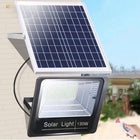
    An integrated solar light needs useful daylight at the fixture. If the light belongs under an eave, inside a covered area, or on a shaded wall, a separate panel can be placed in a sunnier location. See Solar Lights with Separate Solar Panel.

    Integrated Panel vs Separate Panel

    Integrated-panel lights are simple because the panel, battery, and fixture are combined in one installation point. Separate-panel systems add flexibility when the ideal lighting position and the ideal charging position are different. Choose based on site conditions rather than assuming one format is always better.

    Brightness, Runtime, and Control Modes

    Compare output with the job the light needs to perform. Decorative path and accent lights can use lower output, while driveways and security zones may need higher-output fixtures. Runtime depends on solar charging, battery capacity, brightness setting, motion activity, weather, and season, so maximum-output operation may not be the best setting for every location.

    Shop by Outdoor Use Case

    For sheds and garages, see Solar Lights for Shed & Garage. For large properties, browse High-Lumen Solar Lights for Large Yards & Driveways. For porches and patios, see Solar Porch & Patio Lights. For landscape layers, browse Decorative Outdoor Lights.

    FAQ

    • Choose a motion wall light for a doorway, stakes or disks for path edges, a split pendant for a shed interior, an adjustable spotlight for a tree, and a high-output solar flood for a large open zone. Portable rechargeable lanterns are best when the light must move.
    • Separate-panel spotlights, floods, the split pendant, and the COB rope system use a cable between the solar panel or controller and the illuminated component. They avoid household electrical wiring but still need a measured route, secure clips, connector protection, and enough cable to reach direct sun.
    • Rechargeable lanterns are portable, while ground stakes are movable but location-dependent. Wall lights, rope systems, split pendants, and large solar floods generally become fixed through screws, brackets, clips, or cable routing. Choose a portable format when the layout or property use may change.
    • Fully charged portable lanterns can move indoors or around a property during an outage, and solar exterior lights operate independently of the grid when they have stored energy. They are supplemental, not guaranteed emergency equipment; keep dedicated emergency lighting charged and follow safe indoor-use instructions.
    • Choose hardwired lighting when the location lacks dependable sun, continuous primary illumination is required, batteries would be difficult to maintain, or a permanent architectural fixture is preferred. No-wire products simplify power installation, but they do not eliminate mounting, weather, charging, or maintenance constraints.
    • Solar wall lights, pathway lights, spotlights, flood lights, fence lights, and decorative landscape lights can all be installed without connecting them to a fixed mains circuit when they include their own solar charging and battery system.
    • Solar lighting is one of the most practical options because it does not require a fixed electrical feed, but performance depends on access to daylight. The best choice depends on required brightness, runtime, installation location, and available solar exposure.
    • Yes, higher-output solar wall and flood lights can provide useful security-oriented illumination. Motion sensing is especially useful because it can deliver brighter light when activity occurs without requiring maximum output continuously.
    • An integrated light combines the solar panel and fixture at one installation point. A separate-panel light lets the panel be placed independently, which is useful when the lamp belongs under an eave, on a shaded wall, or in another location with poor solar exposure.
    • The lamp can work there if its charging system still receives enough daylight. In heavily covered or shaded locations, use a separate solar panel that can be positioned in a sunnier area.
    • Runtime varies by battery capacity, charging conditions, brightness setting, control mode, weather, and season. Dusk-to-dawn, motion, and timer modes can use stored energy differently, so actual runtime should be evaluated for the intended setting.
    • Common locations include paths, driveways, fences, patios, porches, gardens, garage entrances, sheds, side yards, and landscape features. Choose a fixture whose mounting style, weather resistance, output, and charging arrangement match the location.