




How to Make House Numbers Visible at Night Without Wiring

To make house numbers visible at night without wiring, first use plain, high-contrast numerals that are large enough for the viewing distance and free of obstructions. Then aim a small solar light across the number surface, not toward the road.Use steady or dim-background light for advance visibility and motion-only light for close approaches. The solar panel still needs direct daytime sun.
Decide where the address must be read. A door light may help someone on the walkway yet do nothing from the street. A long driveway may require a separate, locally compliant number sign near the road.
Start With the Address, Not the Lamp
There is no single nationwide house-number rule for every U.S. property, so check local fire, building and addressing requirements. As examples, the City of Keene Fire Department advises numerals at least 3–4 inches tall, strong contrast and visibility from the road; it identifies reflective or illuminated numerals as useful at night. The City of Golden Valley specifies four inches locally and says a home more than 45 feet from the lot line may need numbers on a gate, fence, mailbox or another visible position. These are local examples, not universal code.
Lighting cannot rescue missing, undersized, script-style, hidden or low-contrast numbers. Fix the sign first, then reveal its contrast without excessive brightness.
| Nighttime Problem | Why More Light May Not Fix It | Better First Move |
|---|---|---|
| Numbers disappear into the wall | Similar foreground and background colors remain hard to separate | Increase contrast or use a simple contrasting plaque |
| Numbers are hidden from one road direction | A brighter hidden sign is still hidden | Prune the obstruction or add a second compliant marker |
| The house is far from the street | A wall-mounted pool of light may be too distant to identify | Evaluate a roadside post, gate or mailbox location under local rules |
| Bright glare surrounds the numerals | Excess light can reduce edge contrast or shine toward viewers | Lower output and aim the beam across the number face |
| The address appears only after someone reaches the door | A motion sensor may trigger too late for street recognition | Use reflective numerals or a low steady background where permitted |
A Six-Step No-Wiring Setup
Step 1: Confirm Local Rules and Viewing Points
Check required size, location, contrast and illumination with the local authority or fire department. Identify both roadway directions, the driveway entrance and the walking approach. Inspect from a safe, legal position or use a helper.
Step 2: Improve the Number Surface
Use plain Arabic numerals with strong background contrast. Replace damaged characters, clean the plaque and remove branches or decorations from the sightline. Reflective numerals can support headlight visibility but still must satisfy local rules.
Step 3: Define the Visibility Task
Separate street identification from close-approach guidance. The first requires advance readability; the second helps someone already at the gate, garage or step. Do not assume a door light is visible from the road.
Step 4: Choose the Lighting Behavior
For continuous evening identification, use low steady output or a dim background that brightens after motion. Motion-only operation saves energy but leaves the address dark until a trigger. A constant mode can serve a known arrival window, but listed runtime does not guarantee all-night visibility.
Step 5: Position the Lamp and Solar Panel
Temporarily place the lamp above or beside the plaque and aim across the number face. Keep the LED source out of roadway sightlines and windows. An integrated fixture needs a useful beam, clear sensor view and direct sun at one position; deep eaves can make it unreliable.

Step 6: Test the Result After Dark
Test from each intended viewing point, not beneath the lamp. Compare before and after activation, reduce glare and correct shadows across digits. Repeat after a cloudy charging day or seasonal sightline change, then drill only after the address remains identifiable.
Current NoxLumin Product Matches
| Current Product | Verified Controls and Structure | Better Address Role |
|---|---|---|
|
112-LED Solar Motion Sensor Wall Light  |
Four modes: dim plus motion, motion-only, and constant strong or weak; 3000K or 6500K; 120° PIR; listed 5–8 m range | A sunny entrance or garage-number zone needing a choice between background and triggered light |
|
Solar Motion Sensor Address Light  |
Integrated panel; motion sensor; remote dimming; 3000K, 4000K or 6000K; 2200mAh or 6600mAh battery configuration | One door-side plaque, gate number or compact wall zone where the fixture can receive direct sun |
|
10-LED Up-and-Down Solar Wall Lamp  |
Fixed output; Warm Light or White Light; automatic solar operation; IP65; packs of 1, 2, 4, 8, 10 or 12 | A decorative accent beside a high-contrast plaque on a sun-exposed exterior wall |
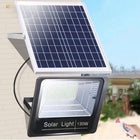
The 112-LED light measures 190 × 153 × 45 mm, with an integrated 1.5W/5V monocrystalline panel, 2200mAh battery and four modes. Dim-plus-motion or constant weak can provide background visibility; motion-only suits a close approach. Constant strong and weak are listed at about four and eight hours, but actual runtime varies.

The address light mounts to a wall, fence or post and includes a remote. Normal Bright uses 2200mAh; High Bright uses 6600mAh. Current housing sizes are 26 × 12.5 × 12 cm and 28 × 13 × 12.5 cm.

The 10-LED decorative lamp comes in Warm Light or White Light and multiple pack sizes. Its 10–120-lumen marketing range varies with the number of lights used; do not assign 120 lumens to one fixture. Test whether the up-and-down pattern actually crosses every numeral.

Browse Solar Wall Lights、Motion Sensor Solar Lights、Wall Decorative Solar Lights and Outdoor Lights Without Wiring. For integrated-panel placement, see the sunlight, mounting-height and PIR pre-installation checklist。
Three Layouts and Their Limits
Numbers Beside the Front Door
Use one defined zone rather than flooding the porch. Aim across the plaque, keep branches out of the sensor view and use low background light for advance visibility. Under a deep roof, verify direct sun before drilling.
Numbers on or Beside a Garage
Check both roadway directions because vehicles, an open door or landscaping can block one angle. A 112-LED light offers background or motion-responsive operation, but LED count is not brightness. Review the numerals, not the driveway.
A House at the End of a Long Driveway
A house-mounted light may not solve roadside identification. Local rules may require another address at the mailbox, gate, fence or post. Confirm the location, traffic sightlines and rules before adding light.

Keep the Light Proportional to the Task
DarkSky International’s Five Principles for Responsible Outdoor Lighting favor useful, targeted, low-level, controlled and warmer-colored light. Light the numerals—not the facade—at the lowest readable level, redirect spill and use controls when constant light is unnecessary.
Color temperature is secondary to contrast and aiming. Test the actual 3000K, 4000K, 6000K or 6500K option against the plaque rather than assuming one color will be clearest.
Common Mistakes
- Lighting a hidden sign: Remove the obstruction or relocate the address before increasing output.
- Testing only from the porch: Verify road directions and the driveway entrance.
- Using motion-only light for street recognition: It may trigger too late.
- Mounting beneath a shaded eave: A convenient lamp position may charge poorly.
- Aiming at approaching traffic: Direct light across the plaque and keep the source outside the viewing line.
- Using LED count as brightness: Compare verified output or test the fixture.
- Treating one city’s dimensions as national law: Confirm the code and addressing practice where the property is located.
FAQ
How can I make house numbers visible at night without wiring?
Should house numbers stay illuminated all night?
Is a motion sensor solar light suitable for house numbers?
How large should house numbers be?
What color temperature is best for lighting house numbers?
Where should a solar light go relative to the address numbers?
Can a wall light make an address visible at the end of a long driveway?
Get more NoxLumin guides on Google
Add NoxLumin as a Preferred Source to help Google show you more of our outdoor lighting guides in Search and AI experiences.


Leave a comment