




4000K vs 6000K Solar Wall Sconces: Which Color Temperature Is Better for a Porch or Garage?

Quick Answer
Choose 4000K for most residential porches, patios, side doors, and garage entrances when you want a cleaner white appearance without the distinctly blue cast of 6000K. Choose 6000K only when crisp, high-contrast task visibility is the priority, such as briefly checking a driveway, vehicle, or exterior work area. Color temperature does not add lumens, improve solar charging, or guarantee better security. Because both options are cooler than the 2700K–3000K range commonly recommended for night-friendly residential lighting, either should be aimed carefully and used at the lowest effective output.
Why the Same Solar Wall Light Can Look Completely Different
A porch and a garage may need similar amounts of light but still look very different under 4000K and 6000K. Correlated color temperature, measured in kelvins (K), describes the apparent color of white light. Lower numbers appear warmer; higher numbers appear cooler or bluer. It does not directly describe brightness, battery capacity, beam coverage, or color accuracy.
On red brick, stained wood, beige siding, and warm stone, 4000K usually looks more balanced. The 6000K option creates colder contrast on gray concrete, white siding, painted numbers, and metal. That crispness can help during a short task but may feel more glaring from a window or sidewalk.
The practical decision is therefore not “Which color is brighter?” It is “Which color supports the location and task without making the outdoor space uncomfortable?”
Key Takeaways
- 4000K is the better starting choice for most residential porches, patios, and decorative entrances.
- 6000K can provide a crisp appearance for short garage, driveway, and exterior inspection tasks.
- Color temperature does not change a fixture’s nominal lumen output or solar-panel charging ability.
- Higher-CCT light can appear more visually prominent, especially on pale siding and reflective surfaces.
- Motion-activated or timed use is preferable to unnecessary all-night high output.
- Neither 4000K nor 6000K is ideal where a local rule or a night-sky goal calls for 3000K or lower.
Key Decision Factors
1. The surface being illuminated

Light interacts with material color and texture. A 4000K sconce generally preserves a more natural residential look on brick, cedar, warm stucco, tan stone, and painted front doors. At 6000K, those materials may look flatter or cooler. Conversely, a cool beam can create strong contrast on gray paving, white garage doors, silver hardware, and contemporary black-and-white exteriors.
2. Decorative light or task light
A porch light is often part of the home’s nighttime appearance, so visual comfort and coordination with nearby fixtures matter. A garage-side light may be used more for finding keys, identifying a package, checking a vehicle, or navigating the driveway. For decorative and social spaces, start with 4000K. For short, detail-oriented tasks, 6000K may be useful if it is not aimed into normal sightlines.
3. Existing outdoor lighting
Mixing different white tones on one facade can look accidental. Compare the sconce with porch, pathway, and landscape lights. If nearby fixtures are warm white, 4000K will still look cooler but usually clashes less than 6000K.
4. Glare and viewing distance
Glare depends on output, shielding, mounting height, optical distribution, background darkness, and whether the bright diffuser is visible—not color temperature alone. However, a high-CCT source can feel more conspicuous against a dark yard. Mount the light so the diffuser illuminates the intended ground or entry area rather than facing a neighbor’s window, the street, or a seated patio position.
5. Controls and runtime
Color choice does not replace correct operating mode. A motion-triggered high setting is suitable for short arrivals and inspections. A low constant mode can provide orientation, while a timed medium mode may suit an early-evening entry period. For more detail on these tradeoffs, see Can Solar Motion Sensor Lights Stay On All Night?
6. Night-sky goals and local requirements
DarkSky’s luminaire guidance classifies 4000K and higher as cool white or blue, while its home outdoor lighting assessment recommends 2700K or lower for the most night-friendly lighting. The National Park Service outdoor lighting principles also favor warm colors and identify 2700K as appropriate for many outdoor uses. If a homeowners association, municipality, dark-sky ordinance, or sensitive setting limits CCT to 3000K or lower, neither 4000K nor 6000K is an appropriate choice.
4000K and 6000K Compared
| Factor | 4000K | 6000K |
|---|---|---|
| Visual appearance | Neutral-to-cool white | Cool white with a more noticeable blue cast |
| Best starting location | Porch, patio, side door, residential entry | Garage work zone or brief driveway inspection |
| Material pairing | Brick, wood, tan stone, beige siding | Gray concrete, white siding, metal, modern facades |
| Perceived effect | Cleaner residential look with moderate contrast | Crisper, colder, more visually prominent look |
| Main limitation | Still cooler than typical night-friendly guidance | Greater risk of looking harsh or mismatched |
| Does it add lumens? | No | No |
Suitable and Unsuitable Use Cases

| Location or task | Better starting choice | Why | When neither is suitable |
|---|---|---|---|
| Covered front porch | 4000K | Less blue and easier to coordinate with residential materials | When local rules or the desired ambiance require 3000K or lower |
| Garage entrance | 4000K for general use; 6000K for brief tasks | Balances comfort with detail visibility | When the diffuser shines directly toward the street or a window |
| Patio seating | 4000K | Less visually severe than 6000K | When a warmer social-lighting effect is required |
| Driveway inspection | 6000K for short use | Creates crisp contrast on concrete and vehicle surfaces | When continuous output would spill beyond the property |
| Dark-sky-sensitive property | Neither | Both exceed commonly recommended night-friendly CCT ranges | Choose a shielded 2700K-or-lower alternative instead |
What Color Temperature Does Not Tell You
Kelvin is not a complete performance rating. A 6000K light is not automatically brighter than a 4000K light and does not necessarily cover more ground. Coverage depends on lumens, diffuser design, mounting height, wall position, and surrounding surfaces. Motion detection depends on sensor design and placement, not CCT.
For an entry or garage, evaluate brightness separately from color. A high-output fixture may be helpful at a larger driveway, but excess light aimed poorly can reduce comfort. The Solar Security Light Brightness Guide explains how task, coverage, and mounting affect a practical lumen choice.
Common Mistakes
- Assuming 6000K means more lumens: CCT describes color appearance, not total light output.
- Choosing from a daytime product photo: Compare light colors after full darkness on the actual siding, paving, and landscaping.
- Mixing 6000K with warm porch fixtures: A strongly cool wall light can make the facade look inconsistent.
- Using high mode continuously: Constant high output can increase glare and use stored battery energy faster.
- Aiming toward the street: Motion lighting should illuminate the entry or work area, not passing drivers or adjacent homes.
- Ignoring reflected light: White garage doors, pale stone, windows, and wet paving can send light back toward viewers.
- Treating IP65 as submersible: Weather resistance does not make a wall light suitable for flooding or pressure washing.
Practical Nighttime Checklist
- Identify whether the location is mainly decorative, navigational, or task-oriented.
- Start with 4000K for a porch or patio and reserve 6000K for a specific high-contrast task.
- Match the new light with other visible outdoor fixtures.
- Confirm that the solar panel receives six to eight hours of suitable direct sunlight.
- Test the selected mode after full darkness, not only at dusk.
- View the result from the driveway, sidewalk, primary windows, patio, and neighboring-property direction.
- Use the lowest output and shortest activation period that meets the task.
- Check that the 180° sensor zone covers the intended approach without routinely detecting road traffic.
- Recheck reflections after rain and after seasonal landscaping changes.
- Verify applicable HOA rules and local outdoor-lighting requirements.
Product Recommendation
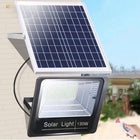
The NoxLumin Elegant Solar Wall Sconce Light is relevant to this comparison because its current options provide the two listed color temperatures: 4000K and 6000K. Both variants are currently available for sale. The fixture is listed at 1400 lumens with 80 LEDs, a 5V/6W integrated solar panel, a 3.2V 6000mAh battery, and a six-to-eight-hour charging time under suitable sunlight.


Its motion sensor is listed with a 180° detection angle and a 5–10 m (16.4–32.8 ft) range. Four operating choices include dim-to-high motion response, motion-activated high light, constant low output, and a constant medium setting with a four-hour timer. The PC/ABS housing and diffusing shade carry an IP65 rating. Actual detection, charging, and runtime depend on mounting position, direct sunlight, weather, temperature, selected mode, and battery condition.


Because the listed 4000K option is still cooler than typical 2700K–3000K night-friendly guidance, it should not be described as a universal warm-white solution. Use motion or timer controls, avoid unnecessary high output, and confirm that the diffuser and sensor are directed toward the property. Related fixtures can be reviewed in the Outdoor Lights and Solar Energy Lights collections.
Frequently Asked Questions
Is 4000K or 6000K better for a front porch?
Is 6000K brighter than 4000K?
Which color temperature is better for a garage entrance?
Does color temperature affect solar charging or battery runtime?
Is 4000K considered warm white for outdoor lighting?
Can a 6000K motion light stay on all night?
Where should a solar wall sconce be aimed to reduce glare?
Get more NoxLumin guides on Google
Add NoxLumin as a Preferred Source to help Google show you more of our outdoor lighting guides in Search and AI experiences.


Leave a comment