




How to Light a Front Walkway for Fall and Holiday Guests Without Wiring

A well-lit front walkway does not need to be uniformly bright from the street to the door. For most homes, a better approach is to use low-level lights to define the walking route, stronger controlled light only where guests need it at the entrance or steps, and optional accent lighting at fences or landscape edges. Solar fixtures can provide these layers without trenching the yard or extending household electrical wiring.
This becomes especially useful during fall and the holiday season, when guests may arrive after dark and temporary decorations can make an already busy front yard visually harder to read. The goal is not to flood the property with light. It is to make the route to the front door easy to recognize while keeping glare and unnecessary spill light under control.
Think About the Guest's Route, Not the Number of Lights
Start at the point where a visitor normally enters the property. That may be a sidewalk, driveway, gate, or curbside parking area. Then follow the actual walking route to the front door.
Look for changes along that route:
- Where does the walkway begin?
- Does it curve or change direction?
- Are there steps, raised edges, planting beds, or changes in surface?
- Is the front door recessed or visually difficult to locate?
- Does a fence, gate, wall, or deck edge need to be distinguished from the walking surface?
Those locations deserve attention before purely decorative areas. A straight, unobstructed section of walkway may need only modest edge definition, while a step or entrance may justify substantially more light.
Key Takeaways
- Use low-level path lights to show the route rather than trying to illuminate the entire yard.
- Reserve higher-output lighting for the front door, garage entrance, steps, or other areas where more visibility is actually needed.
- Warm white light generally creates a more comfortable residential arrival experience and helps avoid an unnecessarily harsh appearance.
- Motion sensors and other controls can provide brighter light when someone approaches without requiring maximum output all night.
- Solar fixtures still need suitable daytime sun exposure, so the best nighttime position is not always the best solar-panel position.
- Holiday and decorative lighting should supplement the normal walking route, not become the only source of usable illumination.
Three Lighting Zones for a Front Walkway
Zone 1: Low-Level Path Guidance
The first layer should make the route visually obvious. This does not require floodlighting the pavement. Small lights positioned beside the walkway can create repeated visual reference points that help guests follow its direction.
A 50-lumen solar path light, for example, is better suited to route marking and landscape accent lighting than to broad security illumination. Multiple fixtures distributed along a path can define its edge while keeping individual light levels modest.
For a residential entrance, warm white is usually the more natural choice. NoxLumin's 50-Lumen Adjustable Solar Pathway Lights provide 50 lumens per fixture, a 3000K Warm White option, an adjustable 25–60 cm height, a 1000mAh battery, dusk-to-dawn operation, and IP65-rated outdoor protection.


The adjustable height can be useful when landscaping changes along the route. A lower configuration may work beside short lawn edges, while a taller configuration can help keep the fixture visible near low planting. The solar panel should remain clear of foliage and other obstructions.

Zone 2: Stronger Light at the Entrance
The front door has a different job from the walkway. Guests may need to identify the door, see a handle or lock, recognize a step, or interact with a doorbell. This is where a higher-output fixture can make more sense.
Instead of using that higher brightness across the entire yard, concentrate it near the entrance. A motion-responsive wall light can remain off or at a lower level until a person approaches, depending on the selected operating mode.
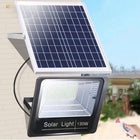
The NoxLumin Outdoor Solar Motion Sensor Wall Light is available in versions rated up to 450, 900, or 1,100 lumens. The corresponding battery capacities are 1500mAh, 3000mAh, and 6000mAh. Its PIR sensor provides approximately 180-degree detection coverage with a stated 16.4–32.8 ft detection distance under suitable conditions.


For a compact side door or small entrance, the highest-output version may be unnecessary. Wider garage entrances or larger exterior areas may justify more output. Actual PIR performance depends on mounting height, approach direction, temperature, installation angle, and surrounding conditions.

Zone 3: Optional Edge and Boundary Lighting
A third lighting layer is useful only where the property has a fence, deck edge, wall, gate, or other boundary that would otherwise disappear into the dark.
These fixtures do not need to compete with the entry light. A 60-lumen fence light can provide local edge definition or decorative ambience while leaving the stronger lighting task to the entrance fixture.
NoxLumin's Solar Fence Lights with RGB & Warm White provide 60 lumens per fixture and IP65-rated protection. Warm White is suitable for routine residential use, while the RGB settings can provide optional decorative color for parties or holidays.


Because the solar panel is integrated into the top of the fixture, do not place it beneath a fence cap, dense foliage, or another object that prevents direct daytime sun exposure.

How Much Brightness Does Each Area Actually Need?
Brightness should follow the task. Using the highest lumen figure everywhere can create glare, flatten the visual hierarchy of the yard, and waste stored battery energy.
| Area | Main Job | Lighting Approach | What to Avoid |
|---|---|---|---|
| Walkway edge | Show the route | Repeated low-level path lights | Trying to floodlight the entire path from one fixture |
| Curve or transition | Show a change in direction | Place a visible reference point near the change | Keeping a rigid pattern that ignores the actual route |
| Front door or steps | Provide clearer visibility | Controlled higher-output wall or motion-sensor light | Using decorative path lights as the only task lighting |
| Fence or deck edge | Define a boundary | Low-output accent lighting | Aiming excessive light toward neighbors or the street |
| Holiday decorations | Add atmosphere | Layer decorative light around the functional lighting plan | Depending on decorative lights to define stairs or the main route |
Why Warmer and More Controlled Light Usually Works Better
Outdoor residential lighting does not need to look like commercial parking-lot lighting. DarkSky International and the Illuminating Engineering Society recommend that outdoor lighting have a clear purpose, be aimed where it is needed, use no more light than necessary, operate only when needed, and use warmer-colored light where possible.
That framework works particularly well for a front entrance. Low-level warm path lights can identify the route, while a motion sensor can provide a temporary increase in brightness at the door or garage instead of leaving a high-output fixture running at maximum power throughout the night.
Warm-colored light can also coordinate more naturally with wood, brick, planting beds, autumn landscaping, and common holiday decorations. The exact color choice remains a matter of use and preference, but brighter and cooler is not automatically better.
Solar Placement Matters as Much as Nighttime Placement
A solar fixture has two locations to satisfy at once: the place where the light is useful at night and the place where its panel can collect enough energy during the day.
This becomes more important in fall as tree shadows and foliage can alter solar exposure. A light beside a walkway may look perfectly positioned at night but perform poorly if a hedge, porch roof, fence post, or tree canopy shades its panel for much of the day.
Before permanently installing several fixtures, observe the proposed locations during daylight. Give priority to unobstructed sun exposure, keep panels clean, and remember that actual nighttime runtime varies with weather, season, temperature, shade, battery condition, and lighting mode.
If the fixture location itself cannot receive useful sunlight, consider whether a product with a separate solar panel is more appropriate than forcing an integrated-panel fixture into deep shade.
When This No-Wiring Approach Is a Good Fit
Solar pathway and wall lighting is particularly useful when:
- The front yard has no conveniently located outdoor electrical circuit.
- You do not want to trench across an established lawn or planting bed.
- The path layout may change in the future.
- You want low-level route lighting combined with motion-responsive entrance light.
- You need a relatively simple retrofit before fall gatherings or holiday visitors begin arriving.
When Solar Lights May Not Be the Right Solution
A no-wiring solar setup is not appropriate for every location. Consider another lighting method when a critical fixture will remain in deep shade, when a code-required lighting level must be maintained consistently, when snow or structures regularly cover the solar panel, or when the area requires sustained high-output illumination regardless of recent sunlight.
Solar accent lights also should not be treated as substitutes for code-required stair, egress, emergency, or security lighting.
Common Front Walkway Lighting Mistakes
Using one very bright light to illuminate everything
A high-output fixture near the house can create strong contrast while leaving the rest of the walkway comparatively difficult to read. Use different lighting levels for different jobs.
Placing lights for perfect symmetry instead of actual hazards
Visual consistency is useful, but a bend, step, gate, or surface transition may deserve priority over maintaining an exact decorative pattern.
Installing solar panels in shade
Nighttime appearance alone should not determine placement. Check daytime solar access before final installation.
Using accent lights as security lights
A 50- or 60-lumen accent fixture can mark an edge, but it is not equivalent to a several-hundred-lumen entrance or motion-sensor light.
Leaving high-output lighting at maximum brightness all night
If full brightness is mainly needed when someone approaches, a motion-responsive mode can make better use of stored energy and reduce unnecessary nighttime light.
Letting holiday decorations hide the permanent route
Decorative lights can attract attention away from the actual walkway. Keep the functional path and entry lighting visually clear even after seasonal decorations are added.
A Practical Front Walkway Checklist
- Walk the route from the street, driveway, or gate to the front door after dark.
- Mark curves, steps, transitions, gates, and the entrance itself.
- Use low-level lighting for route definition.
- Use stronger controlled lighting only where more visibility is required.
- Choose warmer light where practical for a softer residential appearance.
- Check every proposed solar-panel location during daylight.
- Aim and position lights so they do not unnecessarily shine into windows, neighboring property, or the sky.
- Test the complete arrangement after dark before finalizing every mounting point.
- Add holiday decorations only after the functional walking route is clear.
NoxLumin Options for Different Parts of the Route
For low-level walkway guidance, the 50-Lumen Adjustable Solar Pathway Lights provide 50-lumen output, a 3000K Warm White option, adjustable 25–60 cm height, and dusk-to-dawn operation.
For a front door, garage entrance, or another area that needs stronger temporary illumination, the Outdoor Solar Motion Sensor Wall Light provides multiple output and battery configurations with PIR-controlled operating modes.
If the route also follows a fence, deck, or wall, 60-Lumen Solar Fence Lights can add local boundary lighting without turning that accent layer into a floodlight.
You can also compare broader categories in Solar Driveway & Walkway Lights, Motion Sensor Solar Lights, and Outdoor Lights Without Wiring.
Sources
- DarkSky International and Illuminating Engineering Society — Five Principles for Responsible Outdoor Lighting.
- DarkSky International — Home Outdoor Lighting Assessment.
Frequently Asked Questions
What is the best type of light for a front walkway?
Are 50-lumen solar path lights bright enough for a walkway?
Should a front door light stay on all night or use motion detection?
Is warm white or cool white better for a front walkway?
Where should extra light be added along a front walkway?
Do solar walkway lights need direct sun every day?
Can I mix path lights with motion-sensor wall lights?
Get more NoxLumin guides on Google
Add NoxLumin as a Preferred Source to help Google show you more of our outdoor lighting guides in Search and AI experiences.


Leave a comment