




How to Choose Solar Driveway and Walkway Lights
A driveway usually needs more than one lighting layer. Low-level path lights help define edges and walking routes, while brighter wall or motion-sensor lights can improve visibility at garage doors, gates, and approach points. Choose each fixture for the job it needs to perform instead of using the same brightness everywhere.
Edge and Walkway Guidance
Ground-level fixtures such as Solar Pathway Lights Outdoor 8-LED Disk Lights can mark driveway edges, stepping areas, and walkway transitions without creating a tall visual obstruction. Stake-style pathway lights are useful where a higher light source is easier to see above grass or planting.
Garage Entrances and Access Points
Use motion-triggered lighting where people or vehicles approach a garage, gate, or side entrance. This adds brighter light only when it is needed and can complement the lower-output lights used along the route. See Motion Sensor Solar Lights for additional entrance-focused options.
Long or Wide Driveways
For a broad driveway apron, turnaround, or large approach area, higher-output fixtures may be more appropriate than pathway lights alone. Compare High-Lumen Solar Lights for Large Yards & Driveways when the goal is area coverage rather than edge guidance.
Spacing and Brightness
There is no universal spacing because output, beam pattern, landscape layout, and ambient light differ. Start with corners, changes in grade, walking transitions, and entrance points. Use lower-output fixtures for continuous visual guidance and reserve higher-output lighting for work areas and security-oriented zones.
Charging Conditions Along a Driveway
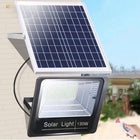
Driveways can pass through shade from trees, fences, garages, and neighboring buildings. Integrated solar fixtures should be placed where their panels receive useful daylight. Where the best lighting position is shaded, a separate-panel design can provide more flexibility.
Related Categories
For a broader selection of ground-level path and garden fixtures, see Solar Pathway & Garden Lights. For brighter property-scale coverage, see High-Lumen Solar Lights for Large Yards & Driveways. For targeted security lighting, browse Solar Flood & Security Lights. For garden-oriented accent layers around the route, see Decorative Outdoor Lights.