High-output solar lights illuminating a large residential driveway, yard, garage and gated entrance at night High-output solar lights illuminating a large residential driveway, yard, garage and gated entrance at night
Filter

    How to Choose Solar Lights for Large Yards and Driveways

    Large outdoor areas need more than a high lumen number. Coverage also depends on beam shape, mounting height, fixture position, sensor behavior, and where the solar panel can charge. Start by deciding whether you need broad area illumination, targeted lighting, or brighter light only when motion is detected.

    Broad Area Lighting

    High-output flood and street-style solar lights are suited to driveway aprons, open yards, parking areas, and broad approaches where a small pathway fixture would not provide useful coverage. Compare beam spread and mounting height as well as lumen output. See Solar Flood & Security Lights for additional high-output options.

    Targeted Zones and Shaded Mounting Locations

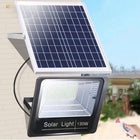
    Spotlights are useful when only a gate, side yard, work area, or section of a driveway needs focused illumination. A separate solar panel can also help when the best fixture position is shaded. Browse Solar Lights with Separate Solar Panel for this type of installation.

    Motion-Activated Entrance Lighting

    A large property does not always need maximum brightness all night. Motion-triggered wall lights can concentrate light near doors, garages, and access points when activity occurs. See Motion Sensor Solar Lights.

    Lumens Are Only One Part of Coverage

    A higher lumen rating does not automatically mean better usable light across every large yard. A concentrated beam can appear brighter in one area, while a wider beam spreads output over more space. Consider fixture height, beam direction, obstacles, reflective surfaces, and the distance from the light to the target area.

    Battery Capacity and Solar Panel Exposure

    Higher-output lighting places greater demand on stored energy. Runtime therefore depends on battery capacity, brightness mode, activation frequency, solar-panel size and exposure, season, and weather. Place panels where they can collect useful daylight and use motion or lower-output modes when continuous maximum brightness is unnecessary.

    Related Categories

    For lower-level route guidance, see Solar Driveway & Walkway Lights. For garage and outbuilding applications, browse Solar Lights for Shed & Garage. For all no-fixed-wiring exterior options, see Outdoor Lights Without Wiring.

    FAQ

    • Use a 1,000–1,500 lumen wall or street-style model for a defined approach, a 2,000–3,000 lumen unit for a broader zone, and the 4,000–8,000 lumen flood options for large open areas. Separate-panel spotlights can cover focused targets rather than the entire property.
    • Several fixtures usually produce more even coverage and fewer deep shadows across a large property. One high-mounted flood can cover a broad zone but may create glare and leave obstacles dark. Divide the yard or driveway into entry, travel, parking, and activity zones before choosing quantities.
    • Use the large flood for the open primary zone, then place smaller wall lights at doors and focused spotlights at signs, trees, or turns where the flood leaves shadows. This layered layout improves wayfinding and avoids aiming one extremely bright beam at every task.
    • Yes. At a low mounting height or near windows and property lines, very high output can create glare and complaints. Reserve it for an appropriately sized open zone, aim it carefully, and use lower modes if available. A smaller model or multiple targeted fixtures may be more comfortable.
    • No. Lumens describe total output, not a guaranteed square-foot area. Beam angle, mounting height, surface reflectance, obstacles, and desired brightness determine useful coverage. Test a representative location or use a professional lighting plan when uniform or regulated illumination is required.
    • There is no single lumen target for every large yard. Required output depends on the area size, beam spread, mounting height, ambient light, and whether you need general visibility, task lighting, or security. Compare coverage as well as lumen output.
    • Use high-output area lighting for broad approaches or parking areas, and combine it with lower-level pathway lights for edge guidance. Motion-sensor lights can be added near garages, gates, and entrances where brighter light is needed on demand.
    • They can be appropriate for wider yards, driveways, and open areas when panel exposure, battery, beam, and mounting match the site. A high lumen number alone does not ensure even illumination, so divide the property into zones and test representative coverage.
    • Mount them high enough to spread light across the target area while keeping the beam directed away from eye level, windows, roads, and neighboring properties. The ideal height depends on the fixture's beam pattern and the area being illuminated.
    • A separate panel is useful when the best light position is shaded or when the panel needs a different angle or location for stronger charging. Integrated designs are simpler when the fixture location already receives good daylight.
    • They can reduce energy use when full brightness is only triggered by activity instead of running continuously. Actual runtime still depends on the product, battery capacity, brightness modes, activation frequency, and charging conditions.
    • Reduced daylight can lower the amount of energy stored during the day, which may shorten runtime or reduce available brightness. Keep panels clean and well positioned, and use energy-saving modes when several low-sun days occur.