


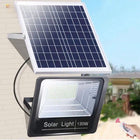


How to Light Outdoor Christmas Yard Decorations with Ground Spotlights

To show the paint on a Christmas reindeer or the words on a yard sign, place one ground spotlight in front and slightly to one side. To show the outline of a dark metal deer, place the light behind it and aim at a solid fence instead. Decide from the sidewalk after dark: can you see the detail you wanted without looking into the lens? If so, one light is enough.
For a nativity scene, the target is usually a face inside the stable, not the roof. A sleigh with lights of its own may need no extra beam at all. Start with what you want visitors to notice, then decide where the light belongs.
What do you want to see from the sidewalk?
Look at the display in daylight from the place people will actually see it. A painted deer can look wonderful up close yet disappear against dark evergreens across the lawn. A shiny red bow might already catch enough light from the porch. Pick out the detail that gets lost at dusk. It gives you a better aiming point than the middle of the yard.
| Decoration | Where to aim first | What to look for after dark |
|---|---|---|
| Painted plywood reindeer or holiday sign | Light the painted face from just off center. | You can distinguish the eye, ribbon, or lettering without a bright patch hiding the paint. |
| Openwork or dark metal silhouette | Aim at a solid fence panel behind the cutout, keeping the beam on your side of the fence. | The bright patch frames the outline. The sky above the fence stays dark. |
| Nativity figures under a small stable roof | Aim through the open front, across the figures rather than up at the roof. | The faces read separately; the nearest figure doesn’t throw a shadow over the central one. |
| Shiny ornaments, tinsel, or a prelit figure | Turn on the existing lights first. Try lighting a nearby matte object instead. | The ornaments still sparkle, and a bright reflection doesn’t pull attention away from the display. |
How to place and aim a ground spotlight
Pick the viewing spot. Stand where a visitor first notices the display and choose one detail to light. Then look behind it. A hedge, wall, or solid panel on your property can catch stray light; a gap facing a neighbor’s window is a reason to turn the decoration or try a different position.
Try one stake position in daylight. Try firm soil in front and to one side for a painted surface, or between a silhouette and its backdrop for an outline. Keep the light off the walking route. With an integrated solar panel, check the panel itself for direct sun; even a small stable roof can shade it.
Set the beam after dark. Start at the lower output. For painted details, open the beam only enough to cover them; if the fence steals attention, narrow the beam or move closer. For a silhouette, the fence is the target: widen the lit patch just past the antler tips without lighting the sky.
Check the display on the approach. Return to the viewing spot, then walk toward the front door. If you see straight into the lens, move the fixture sideways and aim it again at the painted surface or the backdrop. Once both views work, secure the stake in firm soil. Add another light only for a detail still hidden.
Painted reindeer vs. metal silhouette: where to aim
For a wooden deer with a red scarf, try lighting the cheek from the sidewalk side of the planting bed. Stand where guests approach: can you tell which way the deer is facing, or do you see only a bright scarf? Move the beam toward the eye until the face reads. The house and trees can stay dark.
For a dark metal deer with cutouts, use the fence as the lit surface. Place the spotlight between the deer and a solid fence panel. From the sidewalk, the lit wood should show through the openings and just beyond the antlers. With open lawn behind the deer, there is no surface to catch the beam; move the cutout in front of a suitable backdrop if you want this effect.

When the display looks wrong, move the light before adding one
A glossy sign has a white streak across the words. Leave the sign facing its audience. Move the lamp to the other side of it and look again from the sidewalk. If the streak moves off the lettering, you’ve solved a reflection that turning up the brightness would only have made worse. Recheck it on a wet evening; a painted board can look quite different after rain.
The figures in a nativity scene cast shadows on each other. Watch which shadow moves when you slide the light sideways. Sometimes moving one figure slightly forward opens a clear line to both faces. A second light makes sense when a detail remains hidden from the main view; aim it only at that detail so the folds in the robes still have some shadow.
The snow or siding is the brightest thing in the yard. Aim farther into the decoration and reduce the output if you can. Step back and see which surface catches your eye first. This is a practical application of DarkSky’s principles for responsible outdoor lighting: keep light on the object that needs it and use only enough to see it.
Choosing a spotlight for a seasonal display
For a single decoration, an adjustable beam is useful because you can change what it covers when you move the figure. The NoxLumin Adjustable Solar Tree Spotlight delivers 180 lumens per fixture and adjusts from 5° to 90°. The narrow end helps pick out a face or small sign. Open it up for a group at close range. The listed focused reach of up to 33 ft (10 m) describes how far the focused light can reach; it isn’t a recommended setback for a yard decoration. Start in Medium. Switch to High only if the detail still disappears from the sidewalk after you adjust the aim.
For a yard with several separate displays, the Warm White 12-pack of adjustable solar spotlights lets you use the same light color on the natural wood of a stable, a painted sleigh, and a wreath in a planting bed. Count the places that actually need a beam before choosing a pack. A single deer doesn’t need a ring of lamps, and a prelit sleigh may look better with its own lights alone.


One detail matters in winter: the lamp and panel tilt together on this model. A position that lights a figure beautifully at night can leave the panel facing into shade by day. Check the panel at the angle you intend to use. A full charge typically takes 6–8 hours of direct sunlight. If the only useful aiming spot sits under an evergreen, compare integrated and separate-panel landscape lights before buying. For a wreath that swings with the front door instead, see the Christmas porch lighting guide.

Frequently asked questions
Will a spotlight show the colors on a painted Christmas yard sign?
How far should a ground spotlight sit from a holiday cutout?
Can I light a dark metal silhouette without shining light through the openings?
Should I add a spotlight to a prelit Christmas inflatable?
Does a ground spotlight project snowflakes onto a house?
Can I hide a solar spotlight behind a present or a shrub?
Can the same spotlight light the decorations and the walkway?
Get more NoxLumin guides on Google
Add NoxLumin as a Preferred Source to help Google show you more of our outdoor lighting guides in Search and AI experiences.


Leave a comment