




Outdoor Solar Lights With Battery Backup: What Takes Over When the Sun Falls Short?

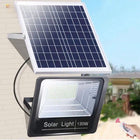
If you need an outdoor solar light to work after several cloudy days, start with one question: who will be there to recharge it? An ordinary solar light stores daylight energy in a rechargeable battery and runs on that battery at night. A solar light with USB input lets you top it up yourself. If a gate or entrance must stay lit while nobody is there, look for a named second power source and a specification that says the light switches to it automatically. “Battery backup” on its own doesn't tell you which of those three arrangements you're buying.
| What the listing says | What you can count on | Where it fits |
|---|---|---|
| Solar panel and rechargeable battery | The battery supplies the LED until the usable charge runs low. | A garden border where it’s fine for the light to go out earlier after a cloudy day. |
| Solar charging plus USB input | You can take the light to a USB power source or bring a compatible power bank to the light. | A patio table or campsite you can visit before you need the light. |
| Automatic transfer to a specified second supply | The controller changes sources under the conditions the manufacturer states, provided the alternate supply is available. | An unattended entrance where the lighting schedule needs to continue after the solar battery runs low. |
What powers a solar light after sunset?
Think of a path light at the edge of a flower bed. During the day its panel converts sunlight into electricity, which charges the battery. At dusk the LED draws from that stored energy. The battery is doing its everyday job every night; it isn't a spare waiting for something to fail. A dusk sensor decides when the light should come on. It doesn't decide where else the light can get power.
The NoxLumin 30-lumen solar garden path light is a straightforward example. Each stake has its own panel and 800 mAh rechargeable battery. If a hedge shades one stake but not the others, buying a larger pack won't share charge between them. Before adding another fixture, look at the shaded one's panel during the day. A small change in position can give that particular light a better opportunity to recharge.


Several gray days pose a different problem from one short evening. If each day puts back less energy than the previous night used, the next evening starts with less in reserve. A larger battery can carry stored charge forward, but needs enough energy coming in to refill it. The U.S. Department of Energy’s guide to solar energy and storage explains why this matters: clouds and shade reduce solar generation, while stored energy can supply light after sunset. For an existing fixture that starts well but fades early, see our cloudy-day charging guide.
When a USB top-up solves the problem
Suppose you're expecting people for dinner on Friday. It's been overcast since Tuesday, and you'd like light on the patio table for the meal. A USB input takes the weather out of one decision: you can charge the lantern from a suitable powered USB source before setting the table. It replenishes the battery for that evening. It doesn't change how much sun the panel will get on Saturday.
Two NoxLumin lanterns offer that option, but they suit different plans:
-
For a warm patio glow: the Vintage Outdoor Solar Lantern has a flickering LED flame effect and a steady warm setting. Its top panel and included USB cable are two ways to charge the built-in 1,200 mAh Ni-MH battery. The listed runtime is about 10–12 hours after a full charge. With the solar function enabled, its light sensor turns it on after dark, so you can top it up beforehand and put it back where you'll enjoy it.


The Vintage Outdoor Solar Lantern can hang by its handle or stand on the patio table. -
For a table you use for several jobs: the 130-lumen Vintage Solar & USB Camping Lantern has a top solar panel, USB input and a manual dimmer. Turn it up to see what you're packing, then turn it down for conversation. With its 1,200 mAh lithium-ion battery, the listed range is about three hours at maximum brightness to around six hours at a lower setting. You decide when to turn this lantern on.


On the 130-lumen Vintage Camping Lantern, the charging input sits below the front dimmer.

Both lanterns list 1,200 mAh, but that doesn’t tell you how long they’ll light your table. For a four-hour dinner, don’t count on the camping lantern at full brightness: its listed runtime at that setting is about three hours. Charge it beforehand and use a lower setting if you need the light to last through dessert. For more on comparing battery labels across models, see what mAh means for solar-light runtime.
Buying for an entrance nobody visits every day
Change just one detail: instead of a patio table, the light is at a gate you visit only on weekends. A USB cable in the kitchen won't help someone arriving at the gate on Thursday. If you need it lit each evening, ask for the exact model's manual or specification sheet and follow the power path. Four details settle most of the purchase decision:
- Name the second supply. Look for a specific compatible source, such as an AC supply with its specified adapter. Check whether it is included and whether that source is actually available at the mounting location. A cable between a separate solar panel and a lamp is still part of the solar system.
- Find the trigger. Look for a statement that the controller changes to that supply without anyone connecting a cable or pressing a button. A description might specify transfer when the battery reaches a low-charge threshold. “Auto on/off” and “dual charging” leave that question open.
- Check what the LED does during transfer. Does the second source power the light, or only charge a battery while the light is off? Ask whether the light stays on, changes brightness, or restarts. If even a brief interruption matters, require an explicit transfer-time specification.
- Check the way back. When solar charge recovers, does the system return to its normal source automatically? Confirm the operating mode and schedule after recovery, too. A fixture that needs a manual reset may be workable at home and a poor match for a locked site.
A useful question to send a seller is: “With both approved sources connected, what happens to the LED if the solar battery reaches its low-charge cutoff at 2 a.m., and what happens the next morning?” An answer that only tells you how many hours it runs on a full charge hasn't described a transfer. Neither USB lantern above is specified as an automatic two-source system.
Match the backup to the interruption
A cloudy spell and a utility outage take away different things. During a cloudy spell, a working wall outlet can recharge a portable lantern indoors. During a utility outage, that same outlet won't recharge it. If the light is already charged, you can still use its stored energy; if you plan to top it up from a compatible power bank, the bank needs its own charge before the outage. For a garden border, you might accept a shorter night. For an unattended entrance, decide which source will still be available at the moment the first one runs short.
Frequently asked questions
Does a rechargeable battery mean a solar light has backup power?
Which NoxLumin outdoor solar lanterns can I top up by USB?
Does USB output on a lantern mean I can recharge the lantern through that port?
Can I leave a solar lantern plugged into USB for continuous lighting?
Will a larger battery guarantee light through three cloudy nights?
Is dusk-to-dawn operation the same as automatic backup switching?
Does AC backup cover a utility outage as well as cloudy weather?
Get more NoxLumin guides on Google
Add NoxLumin as a Preferred Source to help Google show you more of our outdoor lighting guides in Search and AI experiences.


Leave a comment