




Can Solar Lights Work Under a Covered Patio?

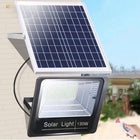
Yes—solar lights can work under a covered patio, but the solar panel needs enough daylight even when the lamp does not. A separate-panel light is usually the most reliable fixed option because the lamp can stay under the roof while the panel sits beyond the roofline. An integrated-panel lantern can also work if you charge it in an exposed sunny location before moving it under cover for the evening.
The important distinction is between the lighting location and the charging location. Treat them as two separate decisions. A patio roof may be ideal for a pendant lamp, rope light, or tabletop lantern at night, yet too shaded for the panel during the day.
Why a Patio Roof Changes Solar Performance
With a separate-panel system, the lamp can stay under cover while the panel charges in a sunny location. The U.S. Department of Energy explains that solar radiation at a location varies with the time of day, season, local landscape, and weather. It also distinguishes direct-beam sunlight from diffuse light. That means a bright-looking covered patio is not automatically a strong charging location; the roof can block much of the direct exposure even when the space does not look dark. See the DOE's Solar Radiation Basics.
Start by observing the patio from midmorning through late afternoon. Note where the roof casts shade, where nearby trees add seasonal cover, and whether an exterior wall, fascia, post, or garden bed stays open to the sky. Check again in a different season if the panel location is close to a roof edge: a lower winter sun angle can move a previously sunny spot into shade.
Quick Decision Table
| Lighting need | Recommended light type | Where the panel charges | Main limitation |
|---|---|---|---|
| Fixed overhead light | Separate-panel pendant | Outside the roof shadow | The supplied cable must reach the panel location and be secured along the route |
| Continuous edge or beam lighting | Separate-panel rope light | Sunny wall, fascia, post, or ground stake beyond the cover | Cut ends and connections must be resealed for weather resistance |
| Tabletop or hanging accent | Integrated-panel lantern with USB backup | Direct sun during the day or USB charging when needed | Decorative output is not a substitute for task or security lighting |
Three Practical Product Matches
1. Overhead light: use a separate-panel pendant
For a covered patio, gazebo, or porch that needs one fixed overhead source, a separate-panel design solves the roof problem directly. The Split-Design Solar Pendant Light uses a 5V/4.5W panel connected by a 16.4 ft cable, so the light can mount to a ceiling or wall while the 7.17 × 5.0 in panel remains outside in a more exposed location. Its listed light output is up to 800 lumens, with adjustable color temperature from 2700K to 6000K and a 4400mAh battery.


Choose the control type to match how you use the patio. The Motion Sensor version offers dim-plus-motion, motion-only, and constant 50% nighttime output. For a seating area, its constant mode can provide steady light without requiring repeated movement. The Timer Control version offers AUTO nighttime operation or 3H, 5H, and 8H settings for a planned evening session. Both versions include remote dimming and 2700K–6000K color adjustment, but the motion and timer controls belong to different variants. A timer setting specifies an operating schedule; available battery charge still limits actual runtime.

2. Patio edges: use a separate-panel COB rope light
For a pergola beam, patio border, stair rail, or sheltered roof edge, a linear source can define the architecture without placing a bright point source at eye level. The Solar COB Rope Light uses 320 COB LEDs per meter and provides continuous illumination across an approximately 180-degree angle. The strip measures about 0.39 × 0.20 in and is offered with a separate 16.4 or 32.8 ft connection cable, which lets the illuminated section stay under cover while the panel and battery assembly occupy a sunnier position.


Measure the illuminated route separately from the connection-cable route. The connection cable is unlit: choosing a longer cable moves the panel farther from the light but does not add illuminated length. The 16.4–82.0 ft (5–25 m) options provide one continuous rope-light run. The 98.4–164.0 ft (30–50 m) options use two runs connected to one solar power system through a 1-to-2 splitter; their combined length is not one uninterrupted strand. Use separate systems if different areas need independent schedules.
Choose Warm White for a softer patio atmosphere or White for a crisper appearance. The remote offers 5H, 8H, and 10H schedules, subject to available charge. Cut only at the marked cutting points and reseal every cut end and connector before outdoor use. The listed IP65 protection depends on proper sealing and does not permit immersion.

3. Tabletop ambience: use a portable solar lantern
A portable lantern works differently because the charging and lighting locations do not have to remain the same. The Vintage Outdoor Solar Lantern has an integrated top panel, USB backup charging, flickering-flame and steady warm-light modes, and a 1200mAh Ni-MH battery. It can charge in an exposed location during the day and move to a covered dining or seating area after sunset.


The product lists 6–8 hours of direct sun for solar charging and 10–12 hours of operation after a full charge, but real results will vary with weather, season, mode, and battery condition. Treat it as decorative nearby light rather than a high-output food-preparation, reading, or security source. Its IPX5 rating supports outdoor use but not immersion.

A Simple Covered-Patio Layout
Think in three zones instead of trying to make one fixture do everything:
- Ceiling zone: place a pendant above a table, conversation area, or central circulation point. Keep it away from a ceiling fan's sweep and verify mounting clearance.
- Perimeter zone: run rope light along the inside of a beam, railing, or edge where the LEDs are concealed from direct view. This reduces glare and outlines changes in level.
- Table zone: add one or two portable lanterns where people gather. Move them to sunlight for charging, or use USB backup when repeated cloudy days make solar charging inconsistent.
This layered approach also supports responsible lighting. DarkSky International recommends lighting only where and when it is needed, aiming it carefully, using no more brightness than necessary, adding controls, and choosing warmer light where possible. See its Five Principles for Responsible Outdoor Lighting. Under a patio roof, shielding the light source behind a beam or shade can improve visual comfort without increasing output.
Placement Checklist Before Installation
- Map roof shade first: identify a panel location that is outside the roof shadow during the useful charging part of the day.
- Measure the routed distance: for example, a 6 ft horizontal run plus a 7 ft vertical run already uses 13 ft of the pendant's 16.4 ft cable, leaving 3.4 ft for corners, drip loops, and service slack. This is a planning example, not a mounting-height recommendation.
- Test before drilling: temporarily place the panel and lamp, charge fully, and observe several nights in the intended mode.
- Keep panels clean and unblocked: pollen, leaves, snow, and new plant growth can reduce exposure.
- Shield and aim the light: direct light toward the surface that needs it and shield exposed LEDs from normal seated and standing viewing positions. Avoid spill toward neighboring windows.
- Respect the rating: IP65 and IPX5 do not authorize underwater use or installation in standing water.
Common Mistakes to Avoid
Assuming that a bright patio is a good charging location. A roof can block direct sunlight even when the area looks bright. Check the panel's actual exposure rather than judging the patio's general brightness.
Ordering by total rope length alone. Confirm the number of light runs, their individual lengths, and the separate connection-cable length before planning corners or disconnected patio edges.
Using decorative light for a task. A warm tabletop lantern can improve atmosphere, but grilling, stairs, locks, and food preparation may need more focused illumination.
Treating a timer as a runtime guarantee. The selected duration cannot compensate for insufficient charge. Use dimming or motion control where supported; for the lantern, USB backup offers an alternative when solar charging falls short.
For more options organized by installation type, compare solar lights with separate panels, solar porch and patio lights, and outdoor lights without wiring.
Frequently Asked Questions
Will a solar light charge under a covered patio?
Can the lamp stay under the roof if the solar panel is outside?
How much direct sun does a covered-patio solar light need?
Should I choose an integrated or separate solar panel?
Can I mount the solar panel on a fence?
Do solar lights turn on while the panel is in sunlight?
Are solar lanterns enough for cooking or security lighting?
Get more NoxLumin guides on Google
Add NoxLumin as a Preferred Source to help Google show you more of our outdoor lighting guides in Search and AI experiences.


Leave a comment