




Motion Sensor vs Timer Solar Pendant Lights: Which Is Better for a Shed?

Choose the motion-sensor version of a split solar pendant light when a shed, detached garage, or barn is entered briefly and unpredictably; choose the timer version when you want dependable light for a planned work session or evening use. The two NoxLumin styles share the same core split-panel lighting platform, but their controls solve different problems: Style 1 responds to light and movement through three sensor-based modes, while Style 2 offers AUTO operation plus 3-hour, 5-hour, and 8-hour timers.


Quick Verdict: Match the Control to the Way You Use the Space
| Decision factor | Style 1: Motion Sensor | Style 2: Timer |
|---|---|---|
| Best use pattern | Short, irregular visits | Planned, continuous sessions |
| Typical locations | Tool shed, storage barn, detached-garage entry | Workbench, gazebo table, hobby area, scheduled evening use |
| Control logic | Three sensor-based modes combining light sensing and motion detection | AUTO mode plus 3H, 5H, and 8H timer settings |
| Main advantage | Light can respond when someone enters instead of running continuously | The user chooses a predictable operating window |
| Main limitation | Sensor placement and movement patterns affect usefulness | A long timer can consume stored energy when the space is unoccupied |

Neither style is universally better. Start with the activity: opening a shed for two minutes is different from repairing equipment for two hours. Then verify that the outdoor panel can receive useful daylight and that the 5 m (16.4 ft) extension cable can reach the intended lamp position without unsafe routing or tension.
Choose Motion Sensing for Short, Unplanned Visits
Style 1 makes the most sense where people enter at inconsistent times and usually stay briefly. A motion-responsive lamp can be practical when retrieving a mower, checking stored supplies, walking into a detached garage, or opening a barn after dark. The current product description lists three sensor-based lighting modes that combine light sensing and motion detection.
A sensor is less useful if shelving or an open door blocks the normal entry path. Test the real approach, including opening the door, stepping inside, and moving toward stored tools.
- Good match: quick equipment retrieval, trash-bin storage, garden-tool sheds, and irregular barn checks.
- Less ideal: long seated work where movement may be limited or where predictable continuous light matters more than automatic response.
- Placement priority: keep the lamp where normal entry movement can be sensed without the door, rafters, or stored objects interfering.
Choose a Timer for Planned Work and Predictable Evenings
Style 2 is better suited to a known schedule. Its current controls include AUTO mode and 3H, 5H, and 8H timer options. That makes it easier to plan illumination for an evening workbench session, a gazebo dinner, a scheduled barn task, or a detached-garage project without depending on repeated motion.
A timer does not guarantee every selected duration at every brightness. The product lists up to 10–14 hours of runtime, depending on brightness and usage conditions, after approximately 8–10 hours of charging.
- Good match: planned hobby sessions, potting work, evening maintenance, and a gazebo used for a defined period.
- Less ideal: a rarely entered storage space where a long preset period could keep the light on after everyone leaves.
- Energy priority: select the shortest useful timer and the lowest comfortable brightness, then verify performance through several real charge-and-use cycles.
The Outdoor Panel Matters More Than the Indoor Lamp Position
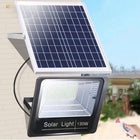
The split design separates energy collection from illumination. The 5V / 4.5W monocrystalline solar panel is listed at 18.2 × 12.7 cm (7.17 × 5.0 in), while the lamp can be wall-mounted or ceiling-hung. This allows the panel to face useful daylight outside while the pendant illuminates a shed, detached garage, barn, gazebo, porch, patio, or another outdoor or semi-enclosed accessory space.
The U.S. Department of Energy explains that photovoltaic technology converts solar radiation into electricity. For this small off-grid system, practical charging therefore starts with panel exposure. A convenient lamp location cannot compensate for a panel placed beneath a deep eave, behind a tree, or on a wall that receives little useful sun.
Observe the panel location at several times of day and account for seasonal foliage, neighboring structures, snow, and dirt. Mount it securely according to the instructions and keep its face unobstructed.
Use the 16.4-Foot Cable as a Layout Boundary

The listed extension cable is 5 m (16.4 ft). The route must include the distance to the building entry point, around framing, and to the lamp, with enough slack to avoid tension.
Before drilling, avoid sharp edges, moving doors, hot surfaces, standing water, and places where tools can pull the cable. Weather-seal any building penetration according to the product instructions and applicable local requirements. Do not alter the cable without manufacturer authorization.
Temporarily mark the panel, entry point, cable path, and lamp. Measure the routed path, not a straight line; move a component rather than stretching the cable.
Brightness, Dimming, and Color Temperature

The current NoxLumin product is listed at up to 800 lumens, with remote-controlled dimming and an adjustable color-temperature range from 2700K to 6000K. Maximum output is useful for checking tools, reading labels, or inspecting a work surface, but it may be more light than a small shed needs continuously.
| Setting approach | Where it may fit | Tradeoff |
|---|---|---|
| Warmer light near 2700K | Gazebo seating, relaxed evening use, general orientation | May provide less crisp visual contrast for detailed tasks |
| Midrange neutral appearance | General shed storage and mixed activities | Requires personal testing because surface colors affect perception |
| Cooler light toward 6000K | Short inspections or detail-oriented work | Can feel harsh in a small reflective space |
Start with the lowest comfortable brightness. Pale surfaces spread reflected light, while dark wood absorbs more. Position the shade above normal eye level when possible.
For a gazebo, porch, or other location where light can spill outdoors, DarkSky International recommends useful, targeted, low-level, controlled, and warm-colored lighting. Both motion sensing and timers can support controlled use; the better control is the one that reliably turns light down or off when it is no longer needed.
Runtime Is a System Result, Not a Fixed Promise
The lamp uses a listed 4400mAh rechargeable lithium battery. Product guidance states approximately 8–10 hours of charging and up to 10–14 hours of runtime depending on brightness and usage conditions. These figures describe favorable charging and use, not guaranteed nightly performance.
Panel exposure, season, weather, brightness, temperature, battery age, and motion-activation frequency all affect runtime. Test several charge-and-use cycles before relying on the lamp for an important task.
This portable solar system should not be treated as code-required emergency, security, or egress lighting. Keep a separate charged flashlight available when safe exit or essential work depends on light.
What IP65 Does—and Does Not—Mean Here
The product is listed with an IP65 rating and is described for outdoor or semi-enclosed applications. That supports exposure to ordinary outdoor dust and weather within the manufacturer's installation limits, but it does not mean the lamp, panel, connectors, cable penetrations, or remote can be submerged or pressure-washed.
Follow the instructions for component exposure and connector protection. Keep connections out of standing water and inspect the cable after storms or damage. The rating does not waterproof a hole through a shed wall.
Where the NoxLumin Split Pendant Fits
The NoxLumin Split-Design Solar Pendant Light fits accessory spaces where running utility wiring is undesirable and an outdoor panel can receive useful sunlight. Both current variants are available for sale: Style 1 with motion sensing and Style 2 with AUTO plus timer control. Both use a remote and share the verified 800-lumen maximum, 2700K–6000K adjustment, 4400mAh battery, 5 m cable, and split 5V / 4.5W panel.


A Five-Question Buying Check
- Do visits happen briefly and unpredictably, or in planned blocks of time?
- Can normal movement reach the sensor's useful area without doors or storage blocking it?
- Does the outdoor panel location receive useful daylight through the relevant season?
- Can the supplied 5 m cable follow a protected route without tension or unauthorized alteration?
- Will the selected brightness and color temperature support the task without glare or unnecessary energy use?
If the first answer is “brief and unpredictable,” Style 1 is usually the stronger fit. If it is “planned blocks of time,” Style 2 is usually easier to manage. If the panel or cable questions fail, neither control style solves the installation problem.
Frequently Asked Questions
Is a motion-sensor or timer solar pendant light better for a shed?
Can the solar panel stay outside while the pendant lamp hangs inside?
How far can the lamp be from the solar panel?
Is 800 lumens enough for a shed or detached garage?
How long does the split solar pendant light run?
Which color temperature is best for a shed?
Does IP65 mean every part can be left in standing water?
Get more NoxLumin guides on Google
Add NoxLumin as a Preferred Source to help Google show you more of our outdoor lighting guides in Search and AI experiences.


Leave a comment