






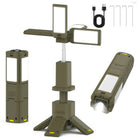


Solar Pendant Light for Shed Without Wiring Guide

Quick Answer
Yes, a solar pendant light can work in a shed or garage without wiring if the light uses a split design: the lamp hangs indoors while the solar panel is mounted outside where it can receive direct sunlight. The best fit is a shed, barn, detached garage, porch, gazebo, or semi-enclosed workspace that needs practical light without running electrical cable. It is not ideal for spaces where the solar panel stays shaded most of the day or where the room needs high-output lighting for long work sessions every night.

Why Shed and Garage Lighting Is Different
A backyard shed or detached garage often has one main problem: the space needs usable light, but running electrical wiring can be expensive, inconvenient, or unnecessary for occasional use. A handheld flashlight or small lantern may help for a few minutes, but it is not always comfortable for finding tools, checking storage bins, or working at a bench.
A split solar pendant light solves a different problem. It separates the charging location from the lighting location. The solar panel can sit outdoors in the sun, while the lamp body hangs inside the shed or garage. The U.S. Department of Energy explains that outdoor solar lighting uses solar cells to convert sunlight into electricity and stores that electricity in batteries for night use. It also notes that site-specific sunlight, shade, and sky conditions affect nightly runtime.
Key Takeaways
- A split solar pendant light is best when the panel can be placed outside and the lamp can hang inside.
- Panel placement matters more than the lamp location; shade directly reduces charging performance.
- 800 lumens can be useful for shed storage, tool lookup, porch tasks, and small garage zones.
- Adjustable 2700K–6000K color temperature helps switch between warm ambient light and clearer task light.
- Motion sensor modes are better for quick entry, while timer modes are better for predictable evening use.
- A solar pendant light is not a replacement for full wired workshop lighting in large garages.
When Does a Solar Pendant Light Make Sense?
A solar pendant light makes the most sense when the space is used intermittently. Examples include a backyard storage shed, garden tool room, small detached garage, barn entry, patio roof, or gazebo. These spaces often need hands-free overhead lighting but do not always justify permanent electrical wiring.
| Use case | Good fit? | Reason |
|---|---|---|
| Backyard shed for tools and storage | Yes | Overhead light helps users find items without holding a flashlight. |
| Detached garage entry or small work zone | Yes, for limited zones | Useful for entry, storage, or light tasks, but not for full professional workshop lighting. |
| Gazebo, porch, or covered patio | Yes | The lamp can hang under cover while the panel charges outdoors. |
| Large workshop used for long nightly projects | Usually not enough | Long work sessions may need wired fixtures or multiple higher-output lights. |
| North-facing wall under heavy tree shade | Not ideal | Limited sunlight can reduce battery charging and runtime. |


Key Decision Factors Before Buying
| Factor | What to check | Why it matters |
|---|---|---|
| Solar panel exposure | Direct sunlight on the outdoor panel | The lamp can only perform well if the panel charges the battery reliably. |
| Cable length | 5 m / 16.4 ft extension cable | The cable must reach from the outdoor panel to the indoor hanging point. |
| Brightness | Up to 800 lumens | Suitable for small-to-medium spaces and task zones, not whole-building floodlighting. |
| Battery capacity | 4400mAh rechargeable battery | A larger battery helps support evening use after daytime charging. |
| Runtime | Up to 10–14 hours depending on mode | Lower brightness and shorter timer use preserve runtime better than constant high output. |
| Color temperature | 2700K–6000K adjustable | Warm light is better for relaxed spaces; cool white is clearer for tools and work areas. |
| Control mode | Motion sensor or timer version | Motion sensing is better for entry; timer control is better for planned evening use. |


How the Split Design Should Be Set Up

The most important rule is simple: place the solar panel for charging, not for appearance. The Department of Energy notes that solar lighting systems work only as long as their solar cells receive the manufacturer-recommended sunlight, and that shaded solar cells can reduce battery charging and performance.
- Choose the lamp location first: above a workbench, central shed aisle, tool wall, or garage entry zone.
- Check whether the 5 m / 16.4 ft cable can reach an outdoor panel location.
- Mount the solar panel where it receives direct daylight, away from deep shade, gutters, dense tree cover, and roof overhangs.
- Angle the panel toward the strongest daily sun exposure available at that site.
- Use lower brightness for routine entry and higher brightness only when task visibility matters.
- Test the light after a full day of charging before permanently finalizing cable routing.
Motion Sensor Version vs Timer Version
The better version depends on how the space is used. A motion sensor version is better for quick entry, short visits, and hands-free use when opening a shed door. A timer version is better for predictable evening activities, such as sitting in a gazebo, working briefly in a garage, or keeping a covered patio lit for a fixed period.
| Version | Best for | Less suitable for |
|---|---|---|
| Motion sensor style | Shed entry, garage door area, tool lookup, short visits | Situations where steady light is needed for a fixed evening period |
| Timer style | Gazebo, porch, covered patio, scheduled evening use | Spaces where users want light only when someone enters |

Suitable vs Unsuitable Use Cases
| Suitable | Unsuitable |
|---|---|
| Sheds, barns, small detached garages, porches, patios, and gazebos | Large commercial workspaces that need continuous high-output lighting |
| Users who want no-wiring overhead light for occasional tasks | Users who cannot place the solar panel in reliable daylight |
| Spaces needing adjustable warm-to-cool white light | Spaces where the panel cable cannot reach a sunny outdoor location |
| Covered areas where the lamp needs protection but the panel can remain outdoors | Rooms that need bright lighting every night for long work sessions |
Common Mistakes
- Putting the panel where the lamp looks best: The solar panel should be placed where it charges best, not where it is least visible.
- Ignoring roof shade: A shed roof or garage overhang can shade the panel during the most important daylight hours.
- Using high brightness for every task: High output drains the battery faster. Use dimmer settings when full brightness is not needed.
- Choosing the wrong color temperature: Warm 2700K is comfortable for patios, while cooler 5000K–6000K is clearer for workbench tasks.
- Expecting solar lighting to behave like wired lighting: Solar runtime depends on sunlight, season, shade, battery condition, and usage mode.
The U.S. Department of Energy also explains that LEDs can be dimmable and are available in different colors and white-light hues. For a shed or garage, that makes adjustable LED color temperature useful because storage, reading labels, and relaxed patio use do not all need the same tone.
Practical Buying Checklist
- Measure the distance from the desired lamp position to the outdoor panel location.
- Confirm that the cable length is enough before drilling or routing the wire.
- Choose a motion sensor version for quick entry and short visits.
- Choose a timer version for planned evening use under a porch, gazebo, or patio roof.
- Use warm white for comfort and cool white for clearer task visibility.
- Check whether the panel will receive direct sunlight in the season when the light will be used most.
- Avoid relying on one solar pendant light for a large full-time workshop.
Recommended NoxLumin Option
For sheds, detached garages, barns, covered patios, and gazebos, the NoxLumin Split-Design Solar Pendant Light is the most relevant option. It combines an indoor hanging lamp body with a separate outdoor solar panel, up to 800 lumens of brightness, 2700K–6000K adjustable color temperature, a 4400mAh battery, a 5 m / 16.4 ft extension cable, remote control, and IP65 outdoor protection for the panel side.
For browsing related options, the Outdoor Lights, Indoor Lights, Solar Energy Lights, and Motion Sensor Solar Lights collections are the most relevant internal links for this topic.


Dejar un comentario