


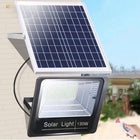


¿Pueden las luces solares con sensor de movimiento permanecer encendidas toda la noche?

Algunas luces solares con sensor de movimiento pueden permanecer encendidas durante toda la noche en un modo de espera de baja intensidad o tenue, pero no se debe esperar que funcionen con el máximo brillo desde el anochecer hasta el amanecer. El rendimiento durante toda la noche depende de la capacidad de la batería, la exposición del panel solar, la estación, el clima, el modo seleccionado y la frecuencia con la que el movimiento activa la salida más brillante. Para una puerta lateral de garaje, un porche o un patio, un modo de tenue a brillante o solo por movimiento suele ser más práctico que el brillo continuo total.
Por qué "permanecer encendido toda la noche" puede significar cosas diferentes
Los propietarios a menudo usan la frase "permanecer encendido toda la noche" para describir tres comportamientos diferentes. Una persona puede querer un tenue resplandor de fondo hasta el amanecer. Otra puede querer que la luz permanezca apagada y que solo se encienda con el brillo total cuando alguien se acerca. Una tercera puede esperar el máximo rendimiento continuamente durante ocho o más horas.
Esos objetivos plantean demandas muy diferentes en una luz solar. Un nivel de espera bajo consume sustancialmente menos energía almacenada que una salida alta continua. El funcionamiento solo por movimiento puede conservar aún más energía porque los LED más brillantes funcionan solo durante la actividad. Antes de elegir un modo, decida si la luz está destinada a la navegación, la disuasión, la visibilidad de tareas o el ambiente decorativo.
La guía de iluminación solar exterior del Departamento de Energía de EE. UU. explica que la duración anunciada por la noche depende de las condiciones específicas de la luz solar. La sombra, el clima nublado, los cambios estacionales y la carga insuficiente pueden reducir el número de horas que una luz solar funciona después del anochecer.
Puntos clave
- Un modo de espera bajo o tenue es más realista para la iluminación nocturna que el brillo máximo.
- El modo solo por movimiento suele ser la opción más eficiente energéticamente para las entradas de garajes y las puertas laterales.
- La capacidad de la batería importa, pero una batería grande no puede compensar un panel solar mal colocado o sombreado.
- Las noches de invierno son más largas, mientras que los días de carga pueden ser más cortos, por lo que la duración puede disminuir estacionalmente.
- Elija el brillo más bajo y el período de alta intensidad más corto que aún satisfaga la necesidad real de seguridad o navegación.
- Pruebe el modo seleccionado después de varios días representativos, no solo después de una tarde inusualmente soleada.
¿Cómo difieren los modos comunes de luz solar con sensor de movimiento?
| Modo de iluminación | Qué sucede por la noche | Mejor escenario de uso | Demanda de batería |
|---|---|---|---|
| Solo movimiento | La luz permanece apagada hasta que se detecta movimiento, luego cambia a alta intensidad. | Puertas laterales de garaje, portones, áreas de almacenamiento y puntos de acceso ocasionales | Menor con poco tráfico |
| De tenue a brillante | Una luz de fondo tenue permanece encendida y se vuelve más brillante cuando se detecta movimiento. | Porches, pasarelas cerca de una entrada y patios que necesitan orientación básica | Moderado |
| Bajo constante | El dispositivo proporciona una salida reducida sin esperar movimiento. | Iluminación de límites suave y áreas donde se prefiere una luz visible durante toda la noche | Moderado a alto, según el nivel |
| Medio constante o temporizado | El dispositivo permanece en un nivel fijo durante un período establecido o hasta que la energía almacenada se agota. | Cenas al aire libre, sesiones de trabajo nocturnas cortas y uso planificado del patio | Mayor |
| Máximo continuo | Los LED permanecen con su máxima intensidad. | Períodos de tareas cortos en lugar de uso rutinario desde el anochecer hasta el amanecer | Mayor |
¿Qué determina si la luz dura hasta el amanecer?
Exposición del panel solar

El panel solar debe recolectar suficiente energía durante el día para soportar el modo nocturno seleccionado. Un panel integrado montado debajo de un techo de porche profundo, un denso dosel de árboles o un voladizo orientado al norte puede recibir luz diurna brillante sin recibir suficiente luz solar directa para una carga completa.
Un dispositivo puede parecer que funciona normalmente durante una breve prueba nocturna y aun así apagarse antes de la mañana después de varios días nublados. Evalúe la ubicación del panel en diferentes momentos del día y durante la estación en la que la luz se utilizará con mayor intensidad.
Capacidad de la batería
Una batería más grande almacena más energía, pero la capacidad solo es útil cuando el panel puede recargarla. El aplique solar NoxLumin que se analiza en esta guía incluye una batería de 6000 mAh y un panel solar de 5 V, 6 W. Esas especificaciones proporcionan un mayor potencial de energía almacenada que una pequeña luz decorativa, pero no crean una garantía incondicional de funcionamiento durante toda la noche.
Nivel de brillo
Una mayor emisión de luz consume energía almacenada más rápido. Un dispositivo de 1400 lúmenes puede proporcionar una fuerte visibilidad de corta duración cerca de un garaje o entrada, pero el uso continuo de la máxima potencia es una condición de funcionamiento diferente a mantener un brillo de fondo bajo. La configuración más eficiente reserva la máxima potencia para los eventos de movimiento.
Frecuencia de movimiento
Una luz cerca de una puerta lateral tranquila puede activarse solo unas pocas veces cada noche. El mismo dispositivo frente a una acera, ramas en movimiento, mascotas, vehículos que pasan o una entrada de vehículos utilizada con frecuencia puede activarse repetidamente. Más activaciones de alta potencia generalmente reducen el tiempo de funcionamiento restante.
Estación y clima
El invierno combina noches más largas con períodos de carga potencialmente más cortos o menos efectivos. El Departamento de Energía señala que los tiempos de funcionamiento de las luces solares exteriores pueden variar sustancialmente en invierno y que la sombra de los árboles o edificios afecta la carga y el rendimiento de la batería.
¿Es la iluminación nocturna la mejor opción?
No siempre. Una luz debe coincidir con el propósito de la ubicación. Una entrada de garaje que se usa solo cuando llega una persona no suele necesitar el máximo brillo durante toda la noche. Un nivel de espera bajo o un modo de solo movimiento puede proporcionar una visibilidad útil mientras reduce el derrame de luz innecesario y conserva la energía almacenada.
Los principios de iluminación exterior responsable de DarkSky International recomiendan que la luz exterior sea útil, dirigida, no más brillante de lo necesario, controlada y de color más cálido cuando sea práctico. La detección de movimiento, los temporizadores y la atenuación no son, por lo tanto, simplemente características de ahorro de batería; también ayudan a limitar la iluminación nocturna innecesaria.
Casos de uso adecuados e inadecuados
| Caso de uso | Enfoque recomendado | Por qué |
|---|---|---|
| Entrada lateral del garaje utilizada algunas veces por la noche | Solo movimiento o de tenue a brillante | Conserva energía mientras proporciona una luz fuerte cuando alguien se acerca. |
| Porche delantero que necesita un resplandor nocturno visible | Bajo constante o de tenue a brillante | Mantiene la orientación sin usar la máxima intensidad continuamente. |
| Patio utilizado para una cena planificada | Salida media temporizada | Coincide con un período de actividad definido en lugar de funcionar hasta el amanecer. |
| Entrada con mucho tráfico | Modo de movimiento cuidadosamente dirigido | Reduce los disparos falsos repetidos y el derrame de luz innecesario. |
| Pared muy sombreada debajo de un techo | Sistema solar de panel separado o dispositivo cableado | Un panel integrado puede no recibir suficiente sol para un funcionamiento nocturno fiable. |
| Ubicación que requiere brillo total garantizado toda la noche | Sistema cableado o sistema fuera de la red más grande y correctamente diseñado | Una luz solar de pared compacta sigue dependiendo de las condiciones de carga diarias. |
Errores comunes que acortan el tiempo de ejecución
- Usar la salida máxima como predeterminada: el alto brillo consume energía almacenada más rápido que los modos de bajo consumo o controlados por movimiento.
- Montar el panel debajo de un alero: la protección contra la intemperie también puede bloquear la luz solar necesaria para la carga.
- Dirigir el sensor hacia el tráfico o las plantas en movimiento: las activaciones innecesarias pueden mantener la luz a alta potencia.
- Probar después de un solo día soleado: la colocación fiable también debe evaluarse después de días nublados típicos o más cortos.
- Ignorar el reflejo de la superficie: el revestimiento claro y el hormigón pueden requerir menos potencia que el ladrillo oscuro, el mantillo o el asfalto.
- Usar una luz de seguridad como iluminación decorativa: la batería y la óptica pueden estar diseñadas para una salida alta intermitente en lugar de una iluminación de área continua.
- Dejar el panel solar sucio: el polvo, las hojas, la nieve y los escombros pueden reducir la luz que llega al panel.
Lista de verificación práctica para la selección de modos
- Defina si el área necesita iluminación de navegación, seguridad, ambiente o tareas.
- Confirme que el panel solar recibe la exposición a la luz diurna recomendada.
- Use el modo solo por movimiento para puertas y portones de bajo tráfico.
- Use el modo de tenue a brillante cuando un pequeño resplandor de fondo sea útil.
- Reserve la salida media o máxima constante para períodos de actividad limitados.
- Dirija el sensor lejos de calles, ramas y áreas con movimientos irrelevantes.
- Verifique la luz después de un clima nublado y durante la parte más fría y oscura del año.
- Reduzca el brillo o acorte el período de tiempo si el dispositivo se apaga antes de lo necesario.
Una opción relevante de NoxLumin

El Aplique Solar Elegante NoxLumin es relevante para aplicaciones en garajes, porches, patios y patios donde los usuarios necesitan elegir entre iluminación basada en movimiento e iluminación continua. Sus especificaciones listadas incluyen 1400 lúmenes, 80 LED, una batería de 6000 mAh, un panel solar de 5 V 6 W, 6-8 horas de carga, protección IP65 y un sensor de movimiento de 180 grados con una distancia de detección listada de 5-10 metros.


Sus modos disponibles incluyen salida alta activada por movimiento, funcionamiento de tenue a alto, salida baja constante al 25% y salida media constante al 50% con un temporizador de cuatro horas. Las dos variantes de color de luz actuales están disponibles para la venta, pero el modo más adecuado aún depende de la luz solar, el tráfico, la estación y la cantidad de iluminación continua requerida.
Para comparaciones de productos más amplias, explore la colección de apliques solares o la colección de luces solares con sensor de movimiento. Para obtener orientación sobre la ubicación, lea la guía de altura de montaje de apliques solares con sensor de movimiento.
Preguntas frecuentes
¿Pueden las luces solares con sensor de movimiento permanecer encendidas continuamente?
¿Una luz solar de pared de 1400 lúmenes funcionará con el brillo total toda la noche?
¿Qué modo de luz solar es mejor para una puerta lateral de garaje?
¿Las luces solares de pared permanecen encendidas durante menos horas en invierno?
¿La detección de movimiento ahorra más batería que el modo de encendido constante?
¿Puede una luz solar de pared integrada cargarse bajo un techo de porche?
¿Es mejor la luz cálida o fría para la iluminación exterior continua?
Descubre más guías de NoxLumin en Google
Añade NoxLumin como fuente preferida para ayudar a Google a mostrarte más de nuestras guías de iluminación exterior en la Búsqueda y en las experiencias de IA.


Dejar un comentario